

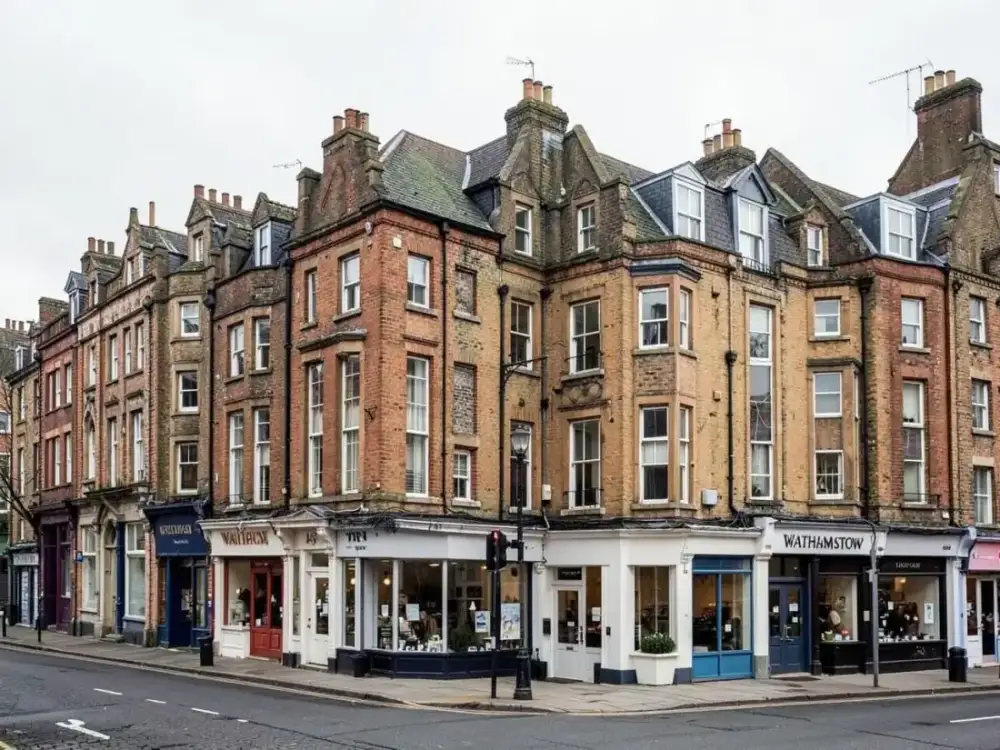




Housing stock in Waltham Forest
Walthamstow and Leyton have dense stocks of Victorian and Edwardian terraces converted into flats and HMOs, often above shopfronts along high streets. Leytonstone and the southern wards have similar conversion stock alongside post-war purpose-built blocks. Chingford is more suburban, with 1930s semi-detached housing and some larger detached properties. Walthamstow town centre has seen substantial new residential development, including several mid-rise and taller blocks.
Licensing and HMOs in Waltham Forest
Waltham Forest operates additional licensing for HMOs across the borough, reflecting the high proportion of shared housing in Walthamstow and Leyton. Confirm the current boundary and renewal date with Waltham Forest Council before submitting an application. The borough's rapid gentrification means conversion and licensing activity is high.
What we commonly find here
- Victorian terrace HMOs in Walthamstow and Leyton with fire doors missing self-closers
- Shared hallways used for storage in dense conversions
- Loft conversions adding bedrooms without an upgraded protected escape route
- New-build Walthamstow town centre blocks requiring first annual review
- Post-war estate blocks with fire-stopping gaps around communal risers
- Mixed commercial-residential buildings where ground-floor risk affects flats above
Working in Waltham Forest
Waltham Forest sits within ULEZ, and parking around Walthamstow and Leyton is controlled. Chingford is easier for parking. HMO landlords range from large portfolios to individual owners, and we confirm access to all letting rooms at booking. Reports are delivered within 24 hours of the visit.
Walthamstow's dense HMO and shopfront stock
Walthamstow's Victorian and Edwardian terraces, particularly around the High Street and Blackhorse Road, have seen intense conversion pressure over the past decade as the area's popularity and transport links have improved, producing a dense concentration of HMOs and flats above shops. Fire doors missing self-closers and shared hallways narrowed by storage are the most frequent findings in this stock, and where a building combines ground-floor retail with residential flats above we check the fire separation and door arrangements between the two uses as a specific line item, since the commercial unit's operating hours and storage habits directly affect the risk to residents above.
- HMO fire doors frequently found without working self-closers
- Ground-floor retail storage and hours affecting residential risk above
Leyton and Leytonstone's Olympic-fringe regeneration
Leyton and Leytonstone sit close to the Olympic Park fringe and have seen a mix of new mid-rise residential development alongside their existing Victorian terrace and post-war estate stock, giving a genuinely varied caseload across a compact area. New-build blocks here typically need the same post-handover verification we apply across London — checking that communal fire doors, dry risers and any smoke control system are performing as designed — while the surrounding post-war estates raise more familiar findings around communal riser fire-stopping and the condition of stairwell fire doors that have seen decades of use.
Chingford's suburban housing
Chingford stands apart from the rest of the borough with its more suburban character, dominated by 1930s semi-detached and detached houses and larger properties towards Chingford Mount and the edge of Epping Forest. Conversion into flats is less widespread here than in Walthamstow or Leyton, but where it has happened the same pattern recurs: party wall separation between former semis left unconfirmed, loft conversions added without a corresponding review of the escape route, and garages converted into habitable space without fire separation from the rest of the house. Parking is markedly easier here than in the denser parts of the borough, which we factor into how visits are scheduled.
What an assessment costs in Waltham Forest
Indicative prices in Waltham Forest
| Property | Typical scope | Price from |
|---|---|---|
| Victorian terrace HMO, Walthamstow or Leyton | HMO fire risk assessment, licence-ready report | from £99 |
| Flat above shop, Walthamstow High Street | Fire risk assessment including commercial-residential interface review | from £120 |
| New-build block, Leyton or Leytonstone | Fire risk assessment, post-handover annual review | from £180 |
| Post-war estate block, Leytonstone or Walthamstow | Fire risk assessment, communal stairwell and riser review | from £170 |
| 1930s semi-detached conversion, Chingford | Fire risk assessment with party wall and loft conversion review | from £130 |
Your legal duty as a Waltham Forest responsible person
Under the Regulatory Reform (Fire Safety) Order 2005 and the Fire Safety (England) Regulations 2022, the freeholder, managing agent, landlord or employer must ensure a written fire risk assessment exists, is acted upon, and is reviewed at least annually. Buildings over 11 metres also require quarterly communal fire door checks, annual flat entrance door checks and wayfinding signage. We can deliver all of it in one visit.