




Fire RiskSpecialists

    Guide · guides

    Flat entrance fire door checks: access, alterations and older doors

    A practical guide for leaseholders and managing agents arranging a complete check.

    Awais Sarwar, Fire Risk Specialists 8 min readMaterial supplied by Awais Sarwar, MSc Updated 16 Oct 2026
    Flat entrance fire door checks: access, alterations and older doors
    AudiKiaGB NewsBudgens

    The short answer

    In relevant English blocks with a top storey more than 11 metres above ground, the Responsible Person must use best endeavours to check every flat entrance fire door at least every 12 months. A full check needs access to both sides and operation. Missing certification alone does not establish that an older door is unsuitable; questions of adequacy should be considered through the FRA or further competent assessment.

    Call the team

    Why the flat entrance matters

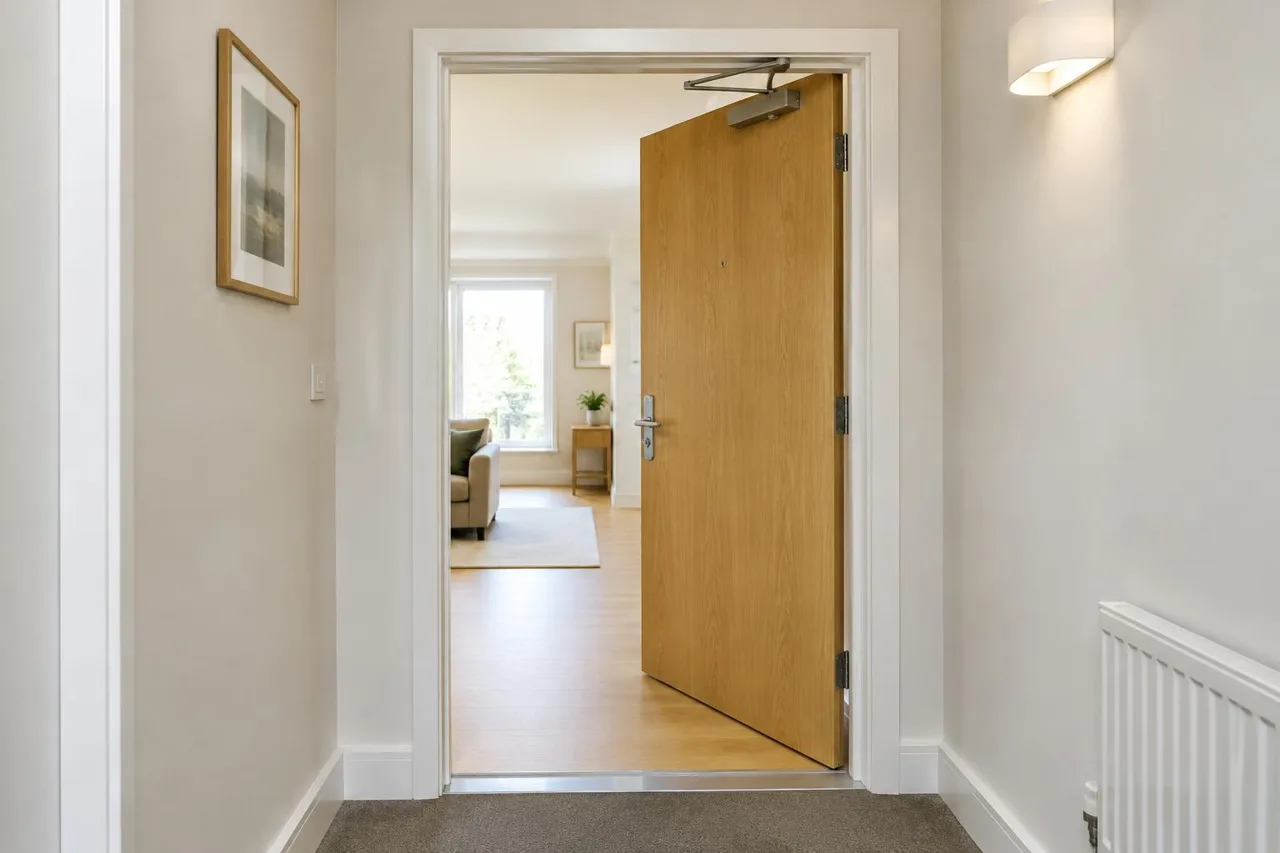
    The door between a flat and common parts is part of the protection affecting shared routes. Its usefulness depends on the whole assembly and operation, including closing action, not just a visible label. The Fire Safety Act clarifies the Fire Safety Order’s scope to include these doors in relevant residential buildings. Maintenance and assessment duties are not confined to newly built or high-rise blocks.

    Annual checks, not a universal annual certificate

    For relevant blocks above the more-than-11m top-storey trigger, Regulation 10 requires best endeavours to check every flat entrance at least every 12 months. It does not create a universal annual certificate requirement. Communal doors have a separate at-least-three-monthly timetable above that trigger. At or below 11m, frequency follows the FRA and maintenance arrangements; exactly 11m is not above the threshold.

    Who arranges the check?

    Responsibility depends on the statutory definition and who has control. The freeholder, management company, landlord or other parties may be involved. A lease can help explain practical access or repair responsibilities but does not replace statutory obligations. Ask who the Responsible Person is, who coordinates appointments and where faults should be reported. An inspection company does not acquire a general right to force entry by accepting an instruction.

    Preparing for access

    Arrange a suitable appointment, keep the door unobstructed and allow checks from both sides and of its operation. Tell the coordinator about known closer problems, damage or alterations. Explain any access needs ahead of time so arrangements can be reasonable. A resident who cannot attend a proposed slot should be offered an appropriate alternative through the management process; appointments and outcomes should be recorded.


    The buildings behind this advice

    AudiKiaGB NewsBudgensPepe's Piri PiriCar Giant

    Best endeavours means active follow-up

    Awais Sarwar’s supplied legislation guide, page 5. Retain reasonable opportunities, notices, attempts and refusals. Persistent refusal belongs with the Responsible Person’s lawful access and escalation arrangements, not a fabricated completed inspection.

    An unanswered knock or corridor-only observation must not become a recorded full pass.

    Awais Sarwar, MSc — Fire Risk Assessor & Fire Safety Consultant, IFSM-registered, National Fire Risk Assessor Register ID 1576

    What gets checked?

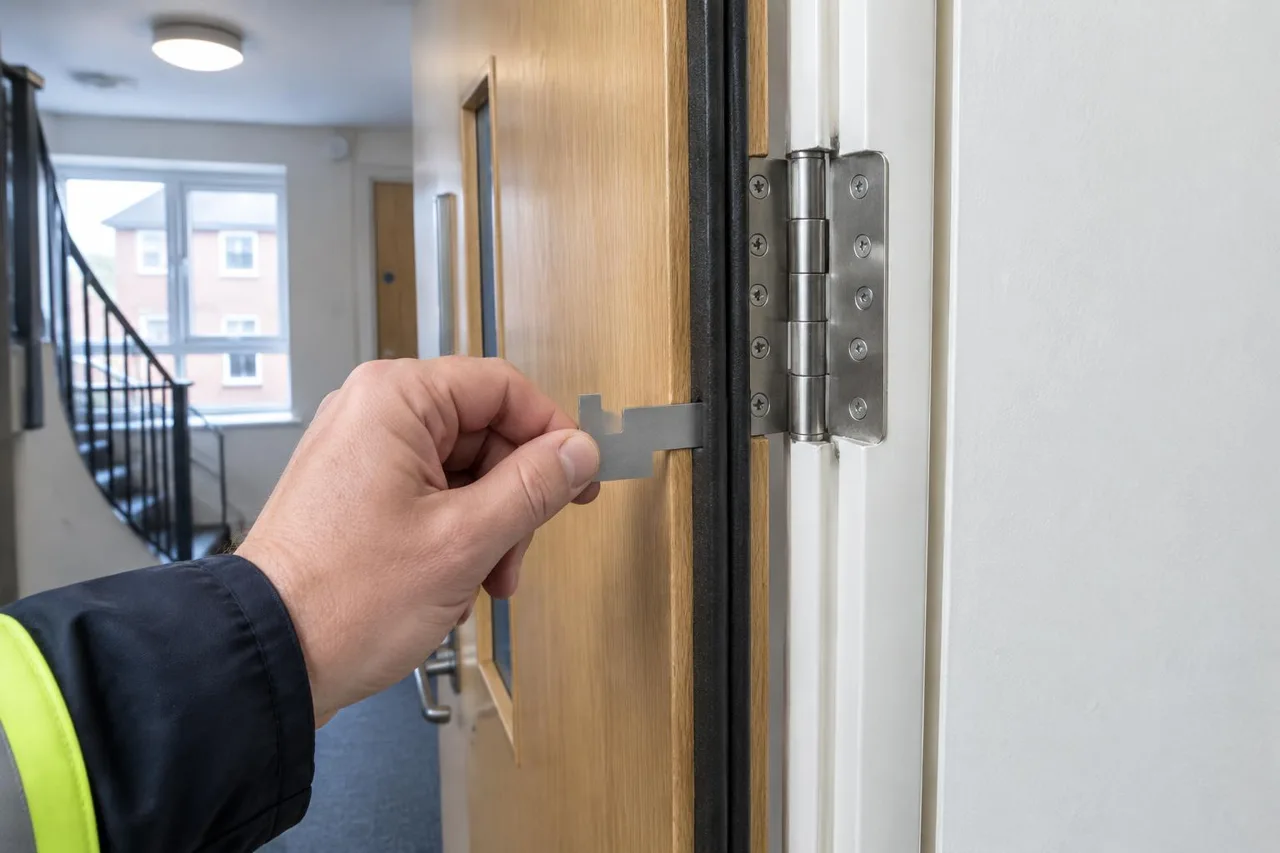
    Accessible checks can cover leaf/frame condition, fit, visible hinges and fixings, fitted seals, glazing and relevant hardware. The door should close fully from fully open and around 15 degrees, overcoming any fitted latch or floor friction. A checker must record limitations and recognise when a door’s specification or hidden construction requires further advice. Routine checks do not recreate manufacturer certification.

    Older doors without modern paperwork

    Government guidance revised in August 2025 says missing certification or modern strips and seals does not alone prove an older door unfit. The building FRA should consider adequacy and uncertainties in context. Do not commission unnecessary replacement solely because a certificate cannot be found. Conversely, absence of a defect report is not proof of a verified fire-resistance rating. Keep the difference between condition and specification clear.

    Alterations and replacements

    Changes to locks, letterplates, glazing, closers or the leaf may affect the complete assembly. Seek appropriate advice and permissions before undertaking work, and retain relevant information. New work may engage Building Regulations, applicable transitional arrangements and information-handover requirements. A routine check does not amount to Building Control approval or installation certification, and a particular component does not independently prove assembly performance.

    Faults between visits

    Report damage, failure to close, wedging or altered fittings promptly to the relevant management contact. Resident information should say to keep fire doors closed when not in use, not tamper with self-closers and report faults. The minimum inspection interval is not a reason to delay addressing a defect. Management should record the report, assess the risk and arrange appropriate action.

    Questions to ask your managing agent

    Ask when your door was last checked, whether access was complete, what limitations were recorded and who is following up findings. Ask for an explanation of any proposed work and what evidence it relies on. A recommendation should identify the scope and defect or uncertainty, not merely invoke “the new rules” as a reason for universal replacement. Lease disputes and liability questions may require legal advice separate from technical inspection.

    After the check

    Keep the inspection record connected to action, maintenance information and any follow-up. A useful report differentiates an observation, a defect and a question needing further assessment. If your block needs contractor support, the managing agent or dutyholder can provide counts, height information and access arrangements for a scope-based quote. The one-off service and recurring programme are distinct options.

    Awais Sarwar, Fire Risk Specialists

    Material supplied by

    Awais Sarwar, MSc

    Fire Risk Assessor & Fire Safety Consultant

    8 min readFacts verified 16 October 2026

    Adapted from material supplied by Awais Sarwar on 14 October 2026; legal source links checked for this edition. No separate new technical review is claimed.

    Sources

    1. BS 9792:2025 housing fire risk assessment; conversion of withdrawn PAS 79-2:2020 — BSI
    2. Fire Safety (England) Regulations 2022: fire door guidance (revised August 2025) — GOV.UK
    3. Fact sheet: Fire doors (Regulation 10) — GOV.UK
    4. Regulation 10: fire doors — legislation.gov.uk
    5. Regulatory Reform (Fire Safety) Order 2005 — legislation.gov.uk
    6. Fire Safety Act 2021: commencement and scope — GOV.UK
    7. Section 156: fire safety responsibilities — GOV.UK
    8. Grenfell Tower Inquiry Phase 1: government response — GOV.UK
    9. Grenfell Tower Inquiry Phase 2: government response — GOV.UK
    10. Residential PEEPs: guidance for Responsible Persons — GOV.UK

    Was this page helpful?

    Frequently asked questions

    Call the team