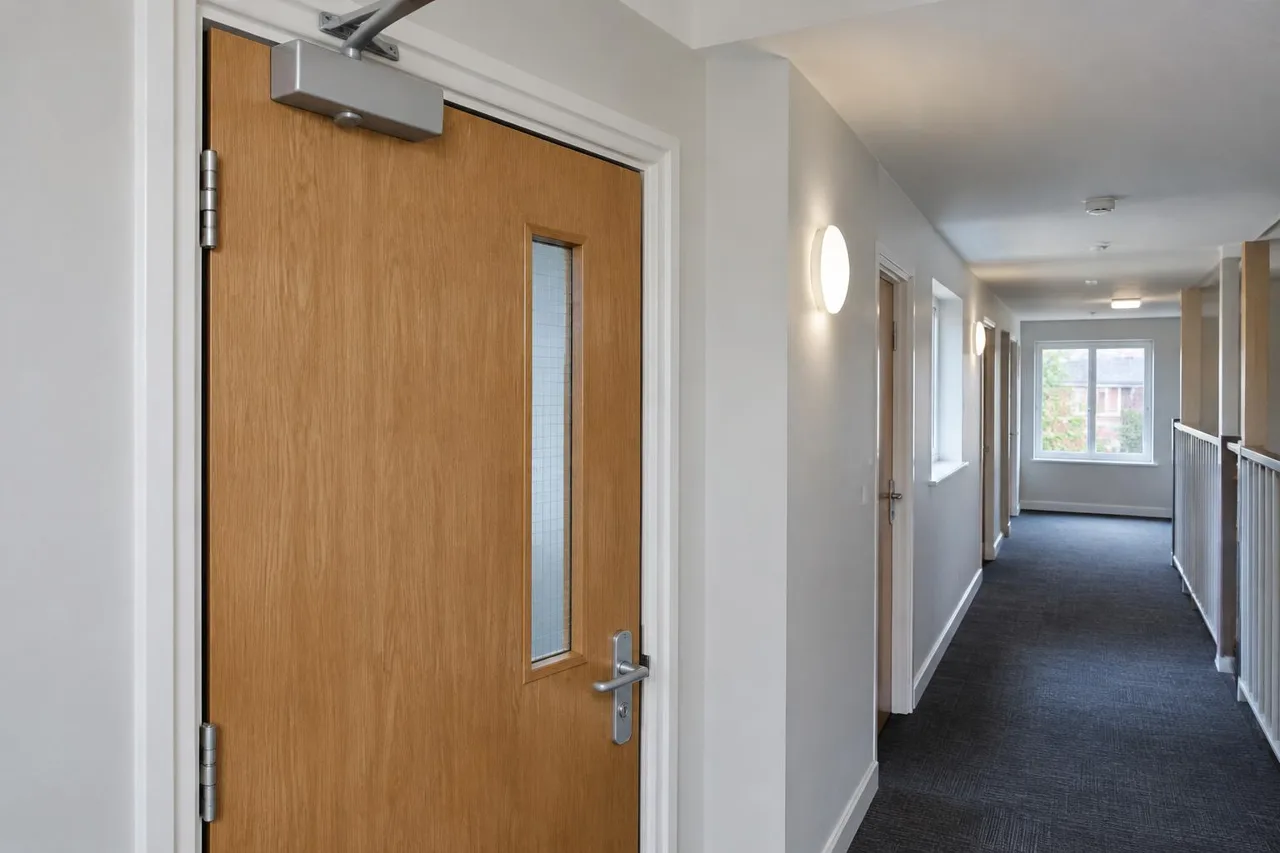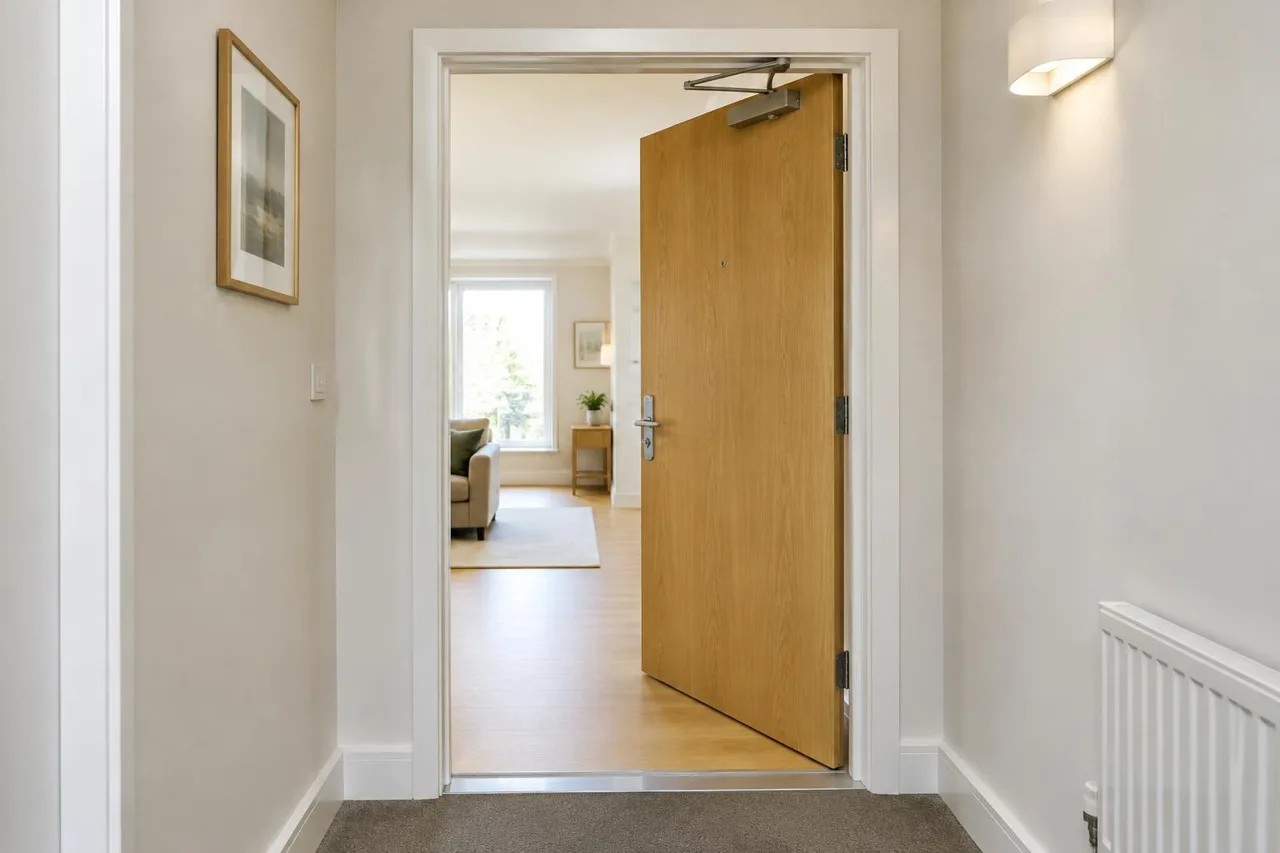





The door-check timetable
Use the building’s statutory top-storey height, not an informal high-rise label. The relevant residential scope includes purpose-built and converted buildings with two or more domestic premises and shared evacuation routes. For the height-specific requirements, check every relevant door rather than assuming a sample proves compliance.
| Building / duty | Frequency and scope |
|---|---|
| Top storey at or below 11 metres | No fixed Regulation 10 annual/quarterly check timetable. Maintain suitable doors; set checks through the FRA and maintenance arrangements. |
| Top storey more than 11 metres: communal doors | Every relevant communal fire door at least every three months. |
| Top storey more than 11 metres: flat entrances | Best endeavours to check every flat entrance fire door at least every 12 months. |
| Resident fire-door information at all heights within scope | New residents as soon as reasonably practicable; repeat at intervals of no more than 12 months. |
Exactly 11m, above 11m and high-rise
Exactly 11 metres is not more than 11 metres. Above 11 metres activates the specific door-check timetable in relevant buildings. The separate high-rise definition in the 2022 Regulations is at least 18 metres or at least seven storeys. A block can trigger the door checks without being high-rise. Obtain reliable height information using the statutory rules if you are uncertain; do not make the decision from roof height or a photograph.
What to check
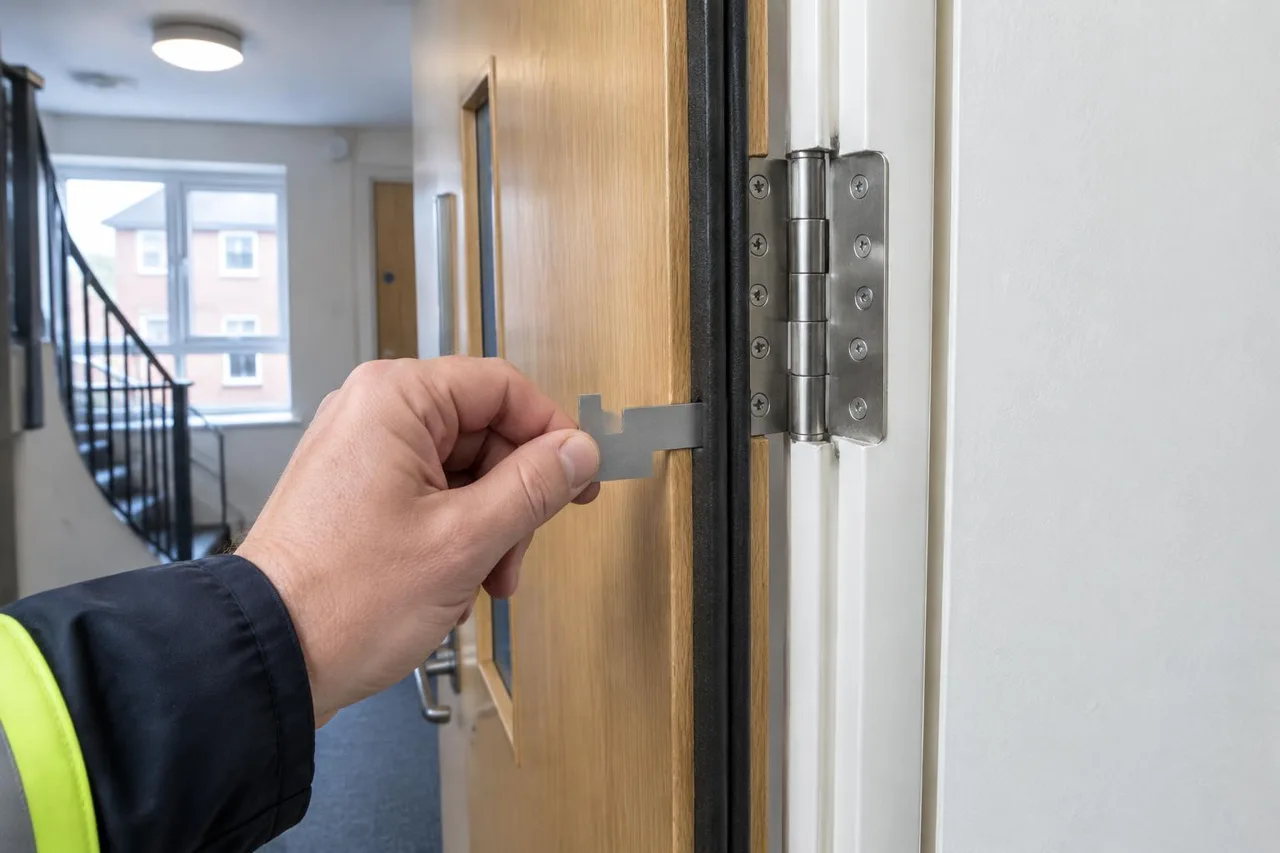
Routine checks concern the accessible condition and operation of an assembly whose suitability has been considered through the FRA. Inspect visible damage or alterations, hinges and fixings, seals where fitted, glazing and hardware. Check closing fully from fully open and around 15 degrees. Government guidance uses a maximum 4mm head/side gap for routine checks; it does not impose that measurement universally at the threshold.
| Component | Routine check |
|---|---|
| Door leaf and frame | Visible damage, splits, distortion, loose components and alterations. |
| Gaps and alignment | Poor fit, rubbing, obstruction and excessive gaps; record measurements where relevant. |
| Hinges and fixings | Missing screws, looseness, damage and signs the door is dropping. |
| Self-closing action | Closure fully into the frame from fully open and around 15 degrees, overcoming any fitted latch or floor friction. |
| Seals, where fitted | Condition and continuity of strips and smoke seals; damage or interference. |
| Hardware and glazing | Relevant latches, locks, letterplates, panels and glazing; visible damage or alteration. |
| Identification and use | Door location, wedging, obstructions, relevant signage and replacement concerns. |
| Access and records | Both sides and operation for a complete flat entrance check; findings, restrictions and action owners. |