

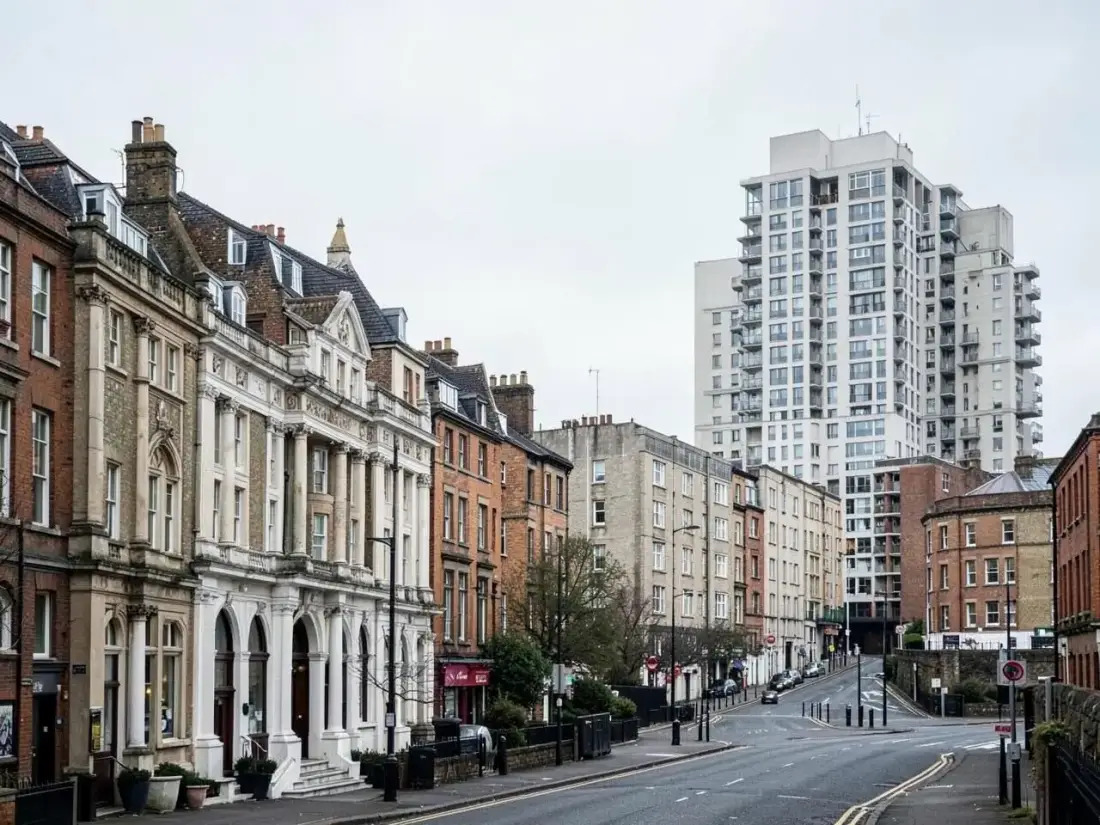




Housing stock in Lewisham
Deptford, Brockley and New Cross have dense Victorian and Edwardian terraces converted into flats and HMOs, often above shopfronts along main roads. Catford, Sydenham and Bellingham contain large post-war estate blocks, generally low to mid-rise with deck or corridor access. Lewisham town centre and the riverside have seen extensive high-rise and mid-rise residential development, including several tall towers. Blackheath and the southern fringes are more suburban.
Licensing and HMOs in Lewisham
Lewisham operates additional licensing for HMOs across the borough and has run selective licensing schemes in the past. Confirm the current boundary and renewal date with Lewisham Council before submitting an application. The high volume of converted stock means licence-ready reporting is a regular requirement here.
What we commonly find here
- Victorian terrace conversions with shared hallways used for storage
- Post-war estate blocks with fire-stopping gaps around communal risers
- HMOs with fire alarm systems not matched to current occupancy
- Lewisham town centre high-rise blocks requiring building safety case documentation
- Loft conversions in Victorian houses altering escape strategy without updated assessment
- Mixed commercial-residential buildings where ground-floor risk affects residential escape
Working in Lewisham
Lewisham sits within ULEZ, and parking around Deptford, Lewisham town centre and Blackheath is controlled. We generally allow extra time for parking and access. Estate blocks are typically managed by the council or housing associations, requiring caretaker coordination. Reports are delivered within 24 hours of the visit.
Deptford, New Cross and Brockley's shopfront conversions
The Victorian terraces along Deptford High Street, New Cross Road and Brockley's main roads frequently combine a ground-floor shop or takeaway with converted flats above, a pattern we assess constantly in this part of the borough. The residential means of escape often runs through or immediately alongside the commercial unit's rear access, so we look closely at whether the fire door separating shop and flat access is maintained, self-closing and free from obstruction by stock or bins. Loft conversions are common across this stock too, frequently added without a corresponding review of whether the single staircase still gives adequate escape time once a third storey of habitable rooms has been created.
- Shopfront-to-flat rear access shared with the residential escape route
- Loft conversions adding a third storey without an updated escape assessment
Catford and Sydenham's post-war estates
The large post-war estates around Catford, Bellingham and Sydenham are generally low to mid-rise, built from concrete or brick with deck or corridor access and communal stairwells serving a significant number of flats. Common findings here include fire-stopping gaps around communal service risers that have accumulated as heating, electrical and communications works have been carried out over decades, damaged intumescent seals on communal fire doors, and mobility scooters or pushchairs stored in stairwells that narrow the protected route. Access is generally straightforward once arranged with the council or housing association caretaker, but coordinating a visit that covers every relevant block on a larger estate can take some pre-planning.
Lewisham town centre's high-rise regeneration
The regeneration around Lewisham town centre and the riverside has brought a number of tall residential towers, several of which fall within scope of the Building Safety Act's higher-risk building regime and require ongoing building safety case documentation rather than a standalone fire risk assessment alone. For these buildings we work alongside the appointed principal accountable person or building safety manager where one is in place, and our assessment is written to sit clearly within that wider documentation rather than duplicate it. First annual reviews after handover typically focus on whether communal fire doors, smoke control systems and evacuation alert systems installed at construction are still performing as designed.
What an assessment costs in Lewisham
Indicative prices in Lewisham
| Property | Typical scope | Price from |
|---|---|---|
| Flat above shop, Deptford or New Cross | Fire risk assessment including commercial-residential interface review | from £120 |
| Victorian terrace HMO, Brockley or New Cross | HMO fire risk assessment, licence-ready report | from £99 |
| Post-war estate block, Catford or Bellingham | Fire risk assessment, communal stairwell and riser review | from £180 |
| High-rise residential tower, Lewisham town centre | Fire risk assessment aligned to building safety case documentation | from £280 |
Your legal duty as a Lewisham responsible person
Under the Regulatory Reform (Fire Safety) Order 2005 and the Fire Safety (England) Regulations 2022, the freeholder, managing agent, landlord or employer must ensure a written fire risk assessment exists, is acted upon, and is reviewed at least annually. Buildings over 11 metres also require quarterly communal fire door checks, annual flat entrance door checks and wayfinding signage. We can deliver all of it in one visit.