

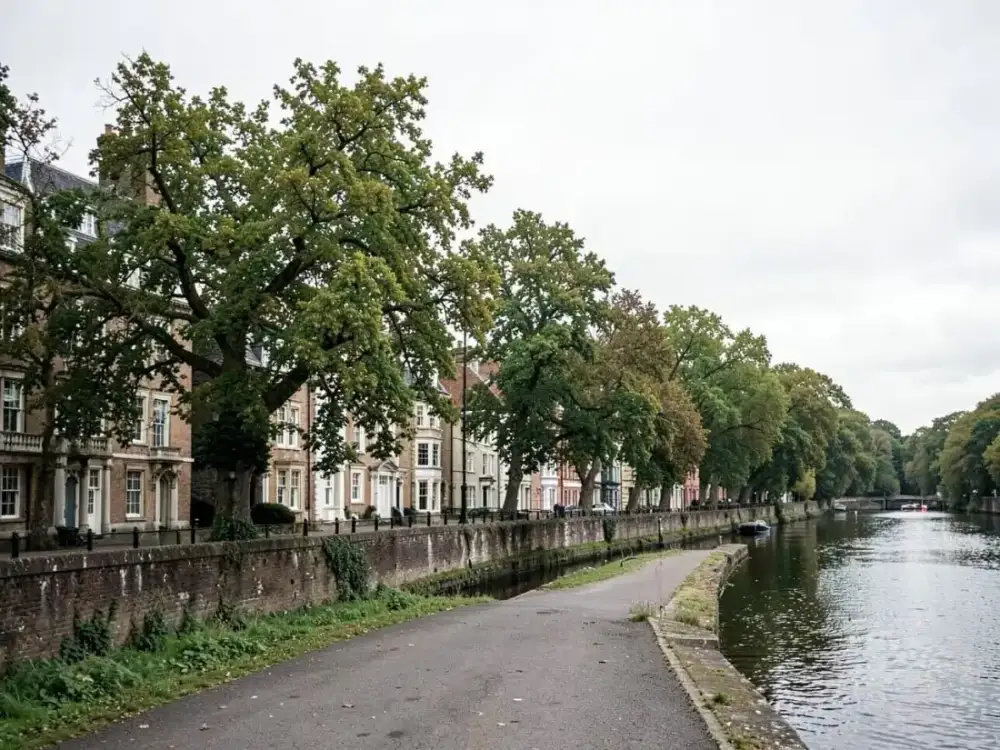




Housing stock in Richmond upon Thames
Richmond, Twickenham and Teddington are dominated by large Victorian and Edwardian detached and semi-detached houses, many converted into high-value flats or small HMOs. Barnes and East Sheen have similar large period stock. Riverside developments in Richmond and Kingston reach add modern mid-rise blocks. New-build development is limited by the borough's planning constraints. Commercial premises are concentrated in town centres and along the river.
Licensing and HMOs in Richmond upon Thames
Richmond applies mandatory HMO licensing to larger qualifying properties and has operated additional licensing in parts of the borough in the past. Confirm the current position with Richmond Council before submitting an application. Listed building consent and conservation area considerations frequently affect fire safety works in this borough.
What we commonly find here
- Large period house conversions with single staircases serving multiple flats
- Listed and conservation-area buildings where fire upgrades must be sensitively justified
- Loft conversions in large Victorian houses altering escape strategy
- Riverside blocks requiring first annual review after handover
- Original timber flat entrance doors lacking certified fire rating
- Shared driveways and gardens used for storage that could obstruct external escape
Working in Richmond upon Thames
Richmond sits partly within the ULEZ boundary, so we confirm the postcode before quoting. On-street parking is generally easier than in inner London, though Richmond and Twickenham town centres can be busy. Heritage considerations mean we often work closely with managing agents and conservation officers. Reports are delivered within 24 hours of the visit.
Richmond and Twickenham's conservation-area constraints
The bulk of Richmond, Twickenham and Barnes sits within conservation areas or contains individually listed buildings, and this shapes nearly every recommendation we write for the borough. Large period houses converted into flats decades ago typically retain original panelled doors, staircases and decorative plasterwork that owners are understandably reluctant to lose, so our reports set out proportionate, evidenced alternatives — enhanced smoke detection, improved compartmentation at ceiling and floor voids, better signage and emergency lighting — where wholesale fire door replacement would need separate listed building consent or conservation area approval. We work closely with managing agents who often already have a relationship with the council's conservation officer, and we frame findings so they can support that conversation rather than pre-empt it.
- Proportionate alternatives to fire door replacement in listed buildings
- Recommendations framed to support, not pre-empt, conservation officer discussions
Teddington and the riverside's mixed old and new stock
Teddington and the stretch of riverside towards Kingston reach combine large period houses converted into flats with a smaller number of newer riverside apartment developments, giving genuinely different assessment profiles within a short distance of each other. Riverside developments raise their own access questions: some are reached via shared private roads or gated developments where we need a code or a call ahead to the concierge, and ground-floor units in flood-resilient developments sometimes have raised thresholds or flood barriers that interact with what would otherwise be a straightforward external escape route, which we check specifically rather than assume is unaffected.
Barnes and East Sheen's large period conversions
Barnes and East Sheen retain a village-like character with large detached and semi-detached Victorian and Edwardian houses, a good number of which have been converted into two, three or occasionally four flats. Because these are large properties, conversion has often involved adding a secondary staircase or external fire escape from an upper floor, and the condition and usability of that secondary route — whether it is kept clear, whether external steps are lit, whether a gate at the bottom can be opened without a key — is a routine finding we check on every visit to this type of building. Shared driveways and gardens used for bin and bike storage are a further recurring issue where storage has crept towards blocking what should be a clear external escape path.
What an assessment costs in Richmond upon Thames
Indicative prices in Richmond upon Thames
| Property | Typical scope | Price from |
|---|---|---|
| Listed or conservation-area house converted to flats, Richmond or Twickenham | Fire risk assessment with heritage-proportionate recommendations | from £160 |
| Riverside apartment block, Teddington or Twickenham riverside | Fire risk assessment including external escape route review | from £200 |
| Large period house converted to 2-4 flats, Barnes or East Sheen | Fire risk assessment with secondary escape route review | from £150 |
| Small HMO conversion, Richmond or Twickenham | HMO fire risk assessment, licence-ready report | from £99 |
Your legal duty as a Richmond upon Thames responsible person
Under the Regulatory Reform (Fire Safety) Order 2005 and the Fire Safety (England) Regulations 2022, the freeholder, managing agent, landlord or employer must ensure a written fire risk assessment exists, is acted upon, and is reviewed at least annually. Buildings over 11 metres also require quarterly communal fire door checks, annual flat entrance door checks and wayfinding signage. We can deliver all of it in one visit.