The Building Safety Act 2022: higher-risk buildings explained
The most significant change to building safety law in a generation, and what it actually means on the ground if your building is 18 metres or seven storeys or above.
The Building Safety Act 2022 creates a new, more stringent regime for 'higher-risk buildings' — generally residential buildings at least 18 metres or seven storeys tall with two or more residential units. It establishes the Building Safety Regulator, requires an 'accountable person' to register the building, assess building safety risks, produce a safety case report, maintain a digital 'golden thread' of information, and pass through mandatory gateway checkpoints during design, construction and occupation. In our experience it is the single piece of legislation newer managing agents and RTM directors misunderstand most, usually by assuming it replaces the Fire Safety Order rather than sitting on top of it.
The Building Safety Act 2022 is the legislative centrepiece of the government's response to the Grenfell Tower fire and the wider building safety crisis it exposed, particularly around unsafe cladding and a fragmented, poorly enforced building control system. Dame Judith Hackitt's 2018 independent review, Building a Safer Future, concluded the entire system of building regulation was not fit for purpose — too complex, with unclear accountability and what she described as a race to the bottom on compliance rather than genuine safety. The Act translates her recommendations into law, creating continuous, named accountability for building safety across a building's design, construction and occupied life, rather than a one-off sign-off at completion.
It responds directly to findings that no single person or organisation was clearly accountable for a higher-risk building's safety throughout its life.
It replaces a system where building control sign-off at completion was treated as the end of the safety conversation, not the start of an ongoing one.
It introduces continuous, named accountability that persists through refurbishment, change of ownership and management, not just at the point of construction.
It sits alongside, not instead of, the Fire Safety Order, the Fire Safety Act 2021 and the Fire Safety (England) Regulations 2022 — we see this misunderstood constantly.
The regulation in its own words
It is worth reading the Act's core scope trigger directly, because the precise height and unit test decides whether a building carries the full higher-risk regime or remains solely under the Fire Safety Order.
What counts as a higher-risk building
The Act's most stringent duties apply only to higher-risk buildings, a defined category, not every residential block. During occupation, a building is higher-risk if it is at least 18 metres in height or has at least seven storeys, and contains at least two residential units. Hospitals and care homes meeting the height threshold are also in scope during their design and construction phase, though not during occupation, which surprises some hospital estates teams the first time they encounter the regime. Buildings below these thresholds remain governed by the Fire Safety Order and, where applicable, the Fire Safety (England) Regulations 2022, but not by the Act's higher-risk regime.
At least 18 metres in height, or at least 7 storeys, whichever threshold is reached first.
Contains at least 2 residential units, such as flats or maisonettes.
Excludes secure residential institutions such as prisons, and most hotels.
Height is measured from ground level to the top of the top storey, using the statutory method set out in supporting guidance, not by eye or estimate.
A building can cross into scope later in its life if it is extended or reclassified, so height should be reassessed after any significant alteration.
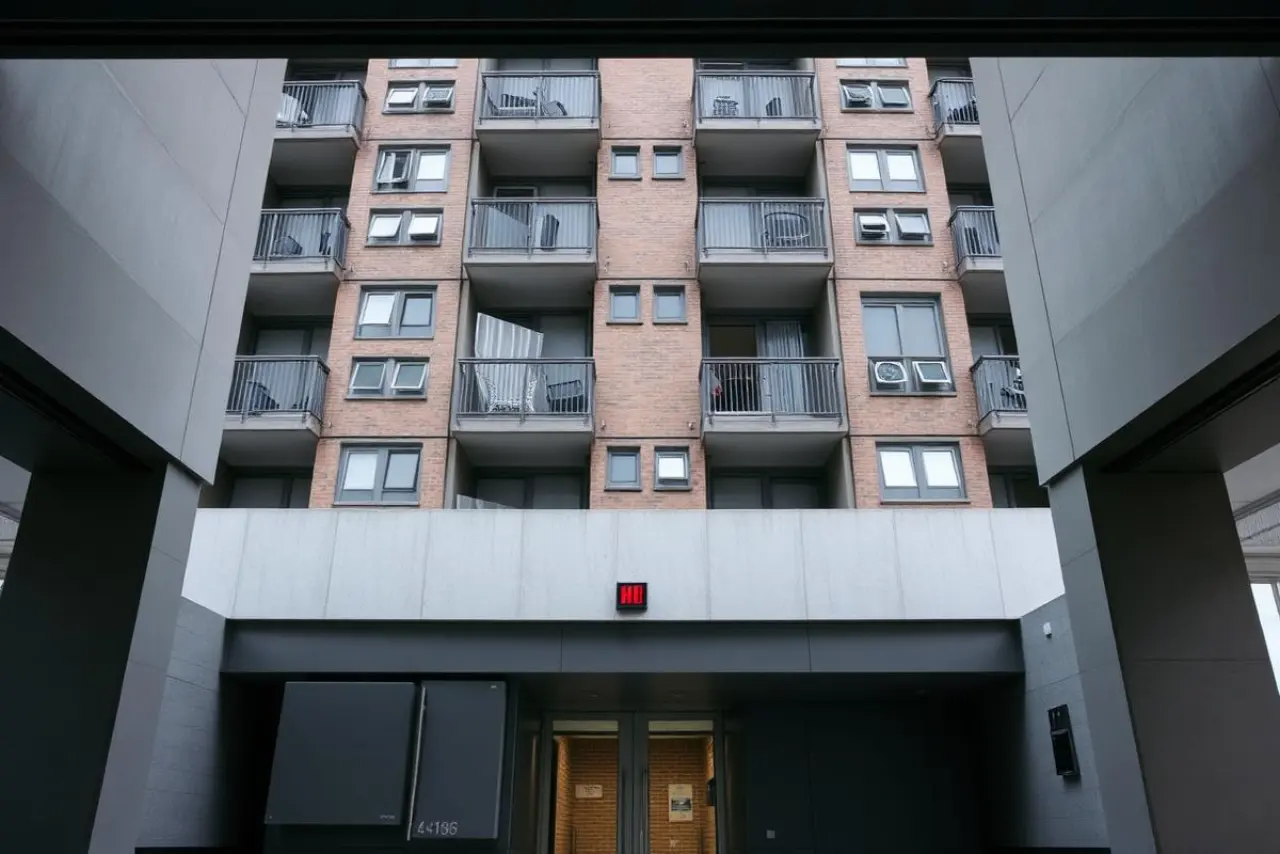
The buildings behind this advice
The Building Safety Regulator
The Act establishes the Building Safety Regulator, operating within the Health and Safety Executive, as the new building control authority for higher-risk buildings and as the overarching regulator of the wider building safety and building control system for all buildings. The Regulator has three main functions: implementing the stricter regulatory regime for higher-risk buildings, overseeing the safety and performance of all buildings, and helping raise competence across the built environment industry. For higher-risk buildings, the Regulator effectively replaces the local authority building control department or an approved inspector as the sole building control body throughout design, construction and occupation, which is a significant change for architects and developers used to choosing their own approved inspector.
The accountable person and the principal accountable person
For an occupied higher-risk building, the accountable person is whoever owns or has a repairing obligation for the common parts — typically the freeholder or a right-to-manage company. Where there is more than one accountable person for different parts of a building, one must be identified as the principal accountable person, responsible for the structure and exterior and for overall coordination between everyone else holding the role. RTM directors in particular need to understand that taking on right to manage in a higher-risk building means taking on this role, with all the duties that follow, and it is not a role that can simply be left to a managing agent without proper resourcing and named responsibility.
Register every occupied higher-risk building with the Building Safety Regulator before it can be lawfully occupied.
Appoint a building safety manager, or otherwise resource competent building safety management directly.
Prepare and keep under review a building assessment certificate application and the underlying safety case report.
Report mandatory occurrences — events presenting a significant risk of a building safety risk materialising — to the Regulator without delay.
Establish a resident engagement strategy and complaints procedure, and provide residents with prescribed building safety information.
Cooperate and share information with any other accountable persons for the same building, in the same spirit as Article 22 cooperation under the Fire Safety Order.
The safety case report
The safety case report is the accountable person's evidenced, documented case that the building safety risks — principally structural failure and the spread of fire — are being effectively managed, based on a suitable and sufficient assessment. It is not a single fixed document; it is a live body of evidence that must be kept current and be produced to the Regulator on request, and specifically at the point of applying for a building assessment certificate. A weak or unevidenced safety case is one of the most common reasons a certificate application is delayed or rejected, and we have seen otherwise well-managed buildings held up simply because the underlying evidence was scattered across several contractors rather than assembled into one coherent case.
The golden thread of information
The golden thread is a digital, structured record of accurate, up-to-date information about a building held throughout its lifecycle — from initial design intent through construction to occupation and any later refurbishment. For higher-risk buildings it must be maintained electronically and be capable of being handed over between duty holders, for example from developer to accountable person, without loss of information. In practice this covers design decisions and the products and materials used, fire and structural safety strategies, as-built information and subsequent changes, and inspection and maintenance records — the same underlying information a secure information box summarises for the fire and rescue service, but far more comprehensive and intended to persist for the life of the building rather than just support an emergency response on the day.
Design intent and decisions made at each stage, including why specific products or systems were chosen over alternatives.
Materials and products used in construction, including test certificates and manufacturer data where fire performance is relevant.
As-built information reflecting what was actually constructed, not just what was originally designed.
A record of subsequent changes, refurbishments and repairs, so the thread stays accurate as the building ages.
Inspection, testing and maintenance records for fire and structural safety systems, kept accessible rather than filed away with individual contractors.
The gateway regime for new and altered higher-risk buildings
For new higher-risk buildings, and major refurbishments of existing ones, the Act introduces three mandatory gateway checkpoints that a project cannot pass without Building Safety Regulator approval. This is a fundamental change from the previous system, where a developer could often start construction with only partial building control sign-off and resolve outstanding points as the project progressed.
The three gateways
Gateway 1Planning application
At the planning stage, requiring a fire statement to be submitted alongside the planning application, addressing fire safety considerations from the earliest design stage.
Gateway 2Pre-construction
Before construction can begin, requiring Building Safety Regulator approval of building control plans — a hard stop that replaces the previous ability to start work with only partial approval in place.
Gateway 3Pre-occupation
Before the building can be occupied, requiring the Regulator to be satisfied the building as constructed meets Building Regulations, triggering issue of a completion certificate.
How the Act relates to existing occupied buildings
For higher-risk buildings that were already occupied when the relevant provisions commenced, there is a registration deadline and a transitional duty to apply for a building assessment certificate when required by the Regulator, rather than an immediate need to pass through the gateway regime designed for new construction. Existing accountable persons should not assume the Act only affects new-build — registration, the safety case report, mandatory occurrence reporting and resident engagement duties apply to existing occupied stock now, and we have seen freeholders wrongly assume they have years of grace simply because their block predates the Act by decades.
How this plays out on a typical London higher-risk block
In practice, the buildings we see moving through this smoothly are the ones where the principal accountable person treated registration as the start of an ongoing programme rather than a one-off form. That means commissioning a genuinely thorough structural and fire safety assessment early, building the golden thread from whatever documentation already exists rather than starting from nothing, and setting up a resident engagement process before residents start asking pointed questions at an AGM. The blocks that struggle are almost always the ones where responsibility was assumed to sit with the managing agent by default, with no accountable person individually named or resourced to actually do the work the role requires.
Early commissioning of a structural and fire safety assessment gives the safety case report a genuine evidence base rather than a rushed retrofit.
Assembling existing documentation from architects, contractors and previous managing agents into a single golden thread record, rather than starting from a blank file.
Naming a specific individual as the principal accountable person's point of contact, rather than leaving the role diffused across a managing agent's general team.
Setting up resident engagement and a complaints procedure proactively, before residents raise concerns reactively.
Costs and resourcing implications for accountable persons
The Act's duties are not free to discharge, and accountable persons, particularly RTM companies made up of volunteer leaseholder directors, should budget realistically for the ongoing cost of building safety management rather than treating registration as the only expense. Building safety manager fees, the underlying structural and fire safety assessments that feed the safety case report, and the systems needed to maintain a genuine digital golden thread all carry a recurring cost that needs to be reflected in the service charge budget, not absorbed informally.
Building safety manager resourcing, whether an in-house appointment or a specialist contracted role.
The underlying fire risk assessment and any supplementary structural surveys feeding the safety case report.
Software or systems to maintain the golden thread in a genuinely accessible, structured digital format rather than a folder of PDFs.
Legal and administrative support for registration, mandatory occurrence reporting, and resident engagement documentation.