

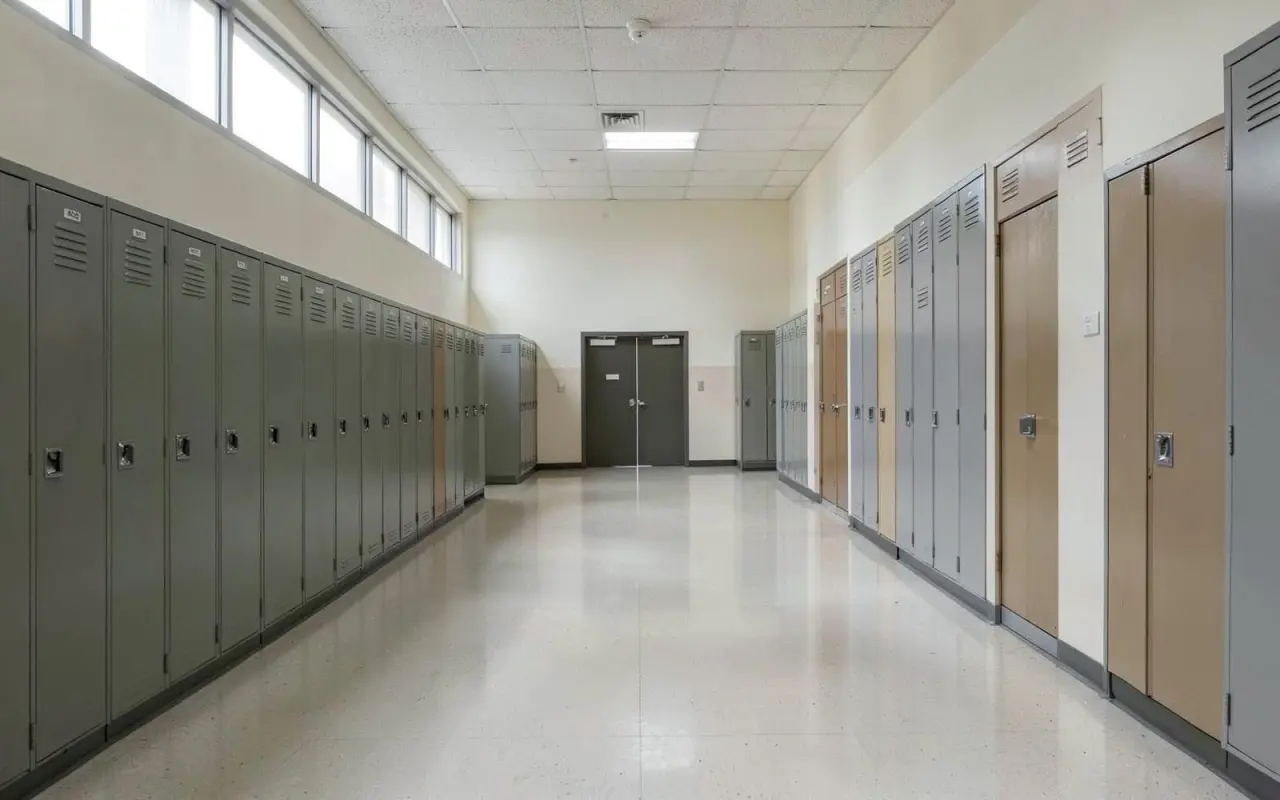




What makes a school different
Schools evacuate well — the drill culture is stronger than in almost any other building type — but they carry risks that other premises do not: very high occupancy in short bursts, pupils who cannot be left unsupervised, specialist rooms with real ignition sources, extensive fire loading in corridors and classrooms, and a site that changes shape every few years with a new modular block or a converted store. The assessment has to cover the whole estate, not just the main teaching building, and it has to keep pace with those changes.
Evacuation, assembly and roll call
We look at whether escape routes can take peak occupancy in the time available, whether assembly points are far enough from the building and reachable safely in bad weather, and whether roll call actually accounts for everyone including visitors, contractors, peripatetic staff and pupils off timetable. Where a school has grown, we frequently find assembly arrangements sized for a roll from a decade ago. Drill records are reviewed too: frequency, variation of time and scenario, and whether outcomes fed back into the arrangements.
- Escape route capacity checked against peak occupancy per storey
- Final exits, gates and external routes checked for locking and winter usability
- Assembly point distance, capacity and safety of the route to it
- Roll call arrangements covering visitors, contractors and off-timetable pupils
- Drill records reviewed for frequency, variation and follow-up
SEND pupils and staff who need assistance
Every pupil, member of staff or regular visitor who cannot evacuate unaided needs a personal emergency evacuation plan, and in mainstream settings these are the plans most likely to be missing or out of date. We review who holds the plans, whether cover staff can find them, whether evacuation chairs are provided where stairs are involved, and — crucially — whether anybody is trained and rostered to use them. An evacuation chair on a landing with nobody trained to operate it is a finding, not a control.
Specialist rooms and site risks
Science laboratories, design technology workshops, art rooms with kilns, catering classrooms, boiler houses, server rooms, caretaker stores and external bin compounds each need specific attention. Arson remains a leading cause of school fires, and most of it starts outside: bins against the building, combustible storage under overhangs, unsecured perimeter access at night. We assess the external picture alongside the internal one, because that is where the highest-consequence school fires begin.
- Science and DT rooms — flammable storage, gas isolation, dust extraction
- Kitchens — extract cleaning evidence, suppression, gas interlock
- Kilns, servers and plant rooms — separation, ventilation, detection
- External arson risk — bin locations, storage against the building, perimeter security
- Temporary and modular buildings — separation distance, alarm interface, escape provision
Lettings and out-of-hours use
Community lettings, holiday clubs, evening classes and weekend sports use put unfamiliar adults and children in the building when school staff are not there. The assessment needs to establish who the responsible person is during a letting, how hirers are briefed, whether the alarm is monitored, and which areas are locked off. Hire agreements often say the hirer is responsible for fire safety — that does not transfer the duty for the building itself, and we set out plainly what the school still owns.
Trusts and multi-site estates
Academy trusts with several schools benefit from one assessor across the estate: risk scored the same way at every site, one renewal calendar, and a trust-level summary that lets the estates lead and the board see where the money needs to go first. Recurring themes across sites — door sets, emergency lighting, external storage — are grouped so remedial work can be procured once rather than school by school. Programme pricing applies from two sites upwards.
What it costs
A nursery or small primary is typically £349 to £549. A larger primary or a secondary school with specialist rooms and sports facilities is usually £549 to £1,200 depending on floor area and the number of separate buildings. Trust-wide programmes are quoted per school with a discount of up to 15%, and surveys are scheduled in holidays or INSET days where you prefer. Reports arrive within 24 hours of the visit.