





Are you the responsible person?
Under the Regulatory Reform (Fire Safety) Order 2005, the responsible person for the common parts of a residential building is the person in control of those premises. For a block of flats that is normally the freeholder, or the right to manage or resident management company where one exists. Crucially, the Order also applies to any other person who has control to any extent — so a managing agent, and sometimes an individual director, can carry duties alongside the company. Appointing an agent does not extinguish the duty; it delegates the doing, not the responsibility.
What the duty actually requires of you
The obligations are simple to state and easy to under-deliver on. You must make a suitable and sufficient assessment of the fire risks in the common parts, appoint a competent person to do it if you are not competent yourself, record the significant findings, put general fire precautions in place, review the assessment regularly and after significant change, and give residents relevant fire safety information. Since 2023, failing to record the assessment or the details of the person who carried it out is itself an offence for most buildings.
- A suitable and sufficient assessment of the common parts
- A competent assessor, whose competence you can evidence
- Recorded significant findings and a recorded action plan
- Fire safety information given to residents, repeated annually
- Review after a fire, an alteration, a change of use or new guidance
- Named record of who carried out the assessment
The exposure directors underestimate
Enforcement under the Fire Safety Order is not theoretical. Fire and rescue authorities can serve enforcement or prohibition notices, and prosecution can follow serious breaches, with unlimited fines and — where a breach places people at risk of death or serious injury — the possibility of imprisonment. Where an offence is committed by a body corporate with the consent, connivance or neglect of a director, that individual can also be liable. For an unpaid RTM director this is uncomfortable reading, and it is precisely why a properly documented, competently produced assessment matters more than its cost.
The insurance and sale angle
Two things reliably force the issue. The first is insurance renewal: underwriters increasingly ask for a current fire risk assessment and evidence that its actions are being addressed, and a gap can affect terms or a claim. The second is a flat sale. Conveyancers now routinely ask the freeholder or RTM company for the fire risk assessment, the door check records and the EWS or external wall position. An absent or stale assessment stalls sales, and leaseholders complain loudly when it does — usually to the directors.
Small conversions get this wrong most often
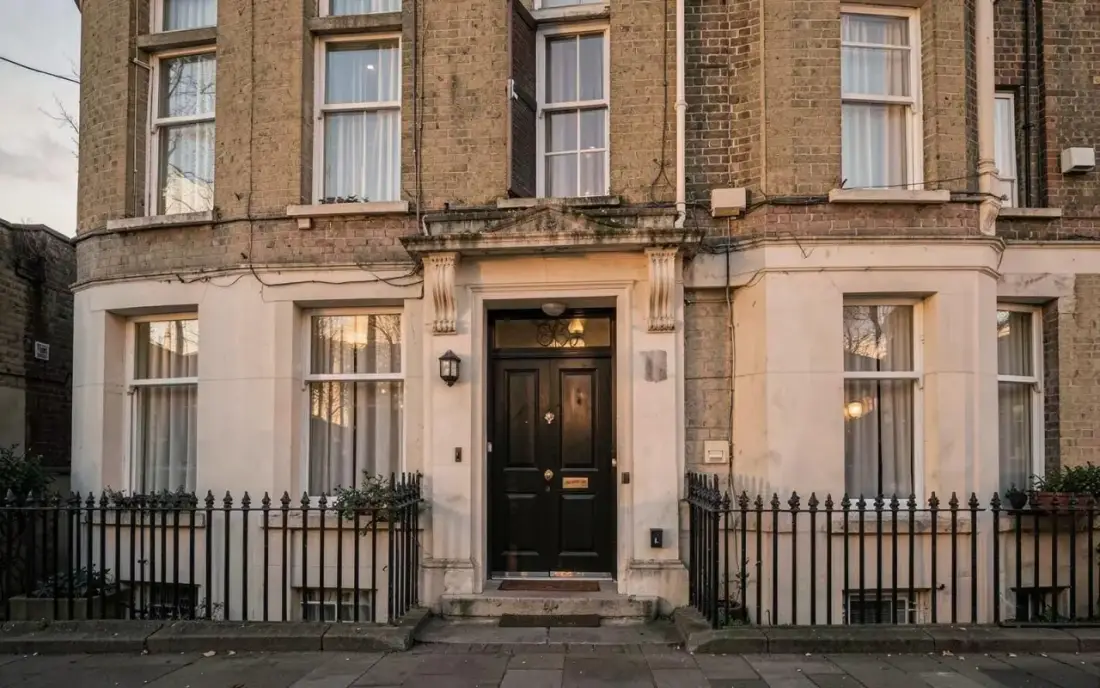
The classic problem building is a Victorian house converted into three or four flats. Everyone assumes it is too small to matter. It is not: two or more domestic premises brings it within the Fire Safety Order for the common parts and within the 2022 Regulations for resident information. These buildings also have the weakest fabric — original lath and plaster, flat doors replaced with panel doors over the years, a single stair with no protection, and a meter cupboard under it. An assessment on a small conversion often costs less than a set of door closers and is the difference between a defensible position and none.
Recommendations you can actually afford
Freeholders and RTM companies fund works through service charge, which means every recommendation has to be justifiable to leaseholders. We band findings by priority and explain what each one addresses, so a director can distinguish the things that must happen now from the things that belong in next year's budget. Where a finding is expensive, we set out interim measures that reduce the risk in the meantime, so there is a defensible position while funds are collected or a section 20 consultation runs.
What a visit involves
For a typical small block the assessor is on site for one to three hours. They inspect the entrance, stair, corridors, flat entrance doors from the common side, meter and riser cupboards, refuse storage, escape lighting and signage, any alarm system, and the roof space where it is accessible. They will ask about alterations, previous incidents, servicing records and how the building is managed. Larger buildings take longer, and where the assessment extends into flats we arrange resident access separately.
Cost and how it is quoted
Small single-storey premises start at £99. A two-storey converted block is typically £149 to £349, three to six storeys £349 to £449, and larger or mixed-use buildings from £449 upwards. Where a freeholder owns several buildings, portfolio pricing applies from the second property. The price is fixed in writing before we attend, and includes the written PAS 79 report and a follow-up call to talk the directors through the findings.