

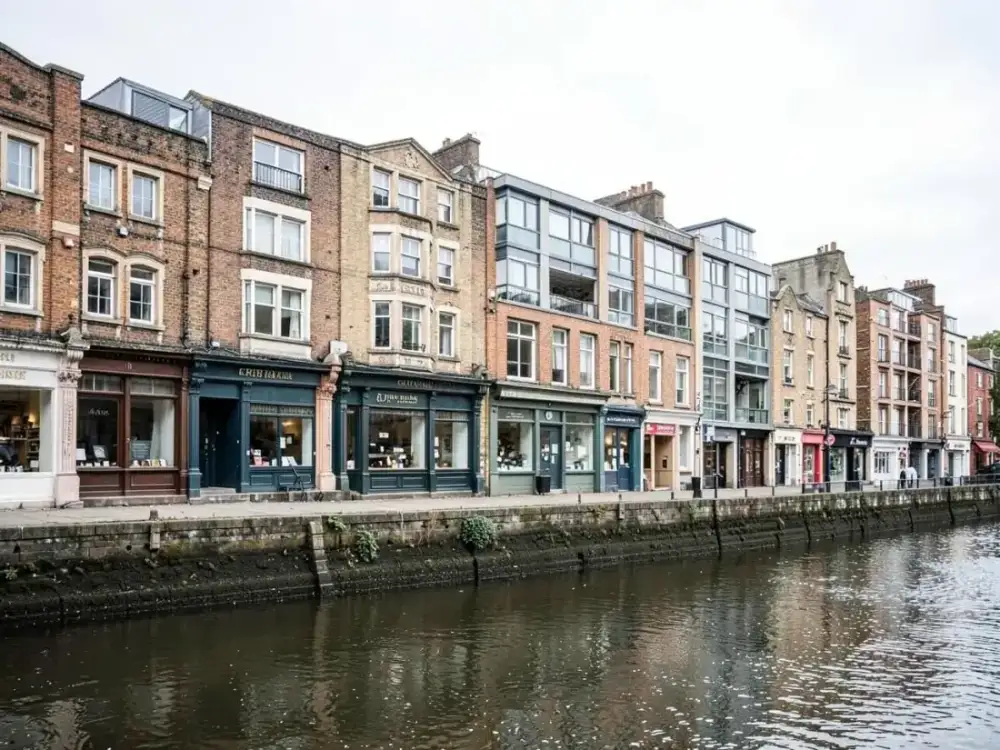




Housing stock in Kingston upon Thames
Kingston town centre has a mix of historic buildings, Victorian terraces converted into flats, and newer high-rise and mid-rise residential development along the river and near the station. Surbiton and New Malden are dominated by large Edwardian and 1930s houses, many converted into flats or small HMOs. Tolworth and the northern wards have more post-war housing and some larger purpose-built blocks. The university and hospital bring a significant HMO population to the area.
Licensing and HMOs in Kingston upon Thames
Kingston applies mandatory HMO licensing to larger qualifying properties and has operated additional licensing in parts of the borough in the past. Confirm the current position with Kingston Council before submitting an application. The borough's conservation areas and riverside development mean heritage and planning considerations sometimes overlap with fire safety.
What we commonly find here
- Victorian terrace conversions in Kingston town centre with shared hallways used for storage
- Large Edwardian house conversions in Surbiton with single staircases serving multiple flats
- Student HMOs with fire alarm systems not matched to current occupancy
- New-build riverside blocks requiring first annual review
- Historic buildings in the town centre where fire upgrades must respect heritage constraints
- Suburban house conversions with loft extensions altering escape strategy
Working in Kingston upon Thames
Kingston sits partly within the ULEZ boundary, so we confirm the postcode before quoting. The town centre and riverside can be busy with controlled parking, while the suburbs are easier. Student HMOs often need term-time access coordination. Reports are delivered within 24 hours of the visit.
Kingston town centre's mixed old and new stock
The town centre around the Bentalls area and the riverside walk mixes historic buildings, some listed, with Victorian terraces converted into flats and a growing run of newer high-rise and mid-rise residential development close to the station. Historic buildings occupied as flats or small commercial premises need fire safety upgrades handled with a proportionate, heritage-aware approach, similar to the constraint we see in listed stock elsewhere in outer south-west London, while the newer towers are more about confirming the fire strategy laid down at construction is still being followed in practice a few years into occupation.
The university and hospital's HMO population
Kingston University and Kingston Hospital both draw a significant population of students and shift-working staff into shared housing across the borough, particularly in the streets around Kingston town centre, Norbiton and the roads towards Surbiton. These HMOs turn over tenants frequently, sometimes mid-term, which means fire alarm systems and escape route signage need to be robust enough to work for occupants unfamiliar with the building, not just long-term residents. We schedule these assessments around term-time access where the landlord or agent flags exam periods or empty properties over the summer, and we specifically check that alarm systems have been extended to match the number of lettable rooms currently in use.
- High tenant turnover requiring robust, self-explanatory escape signage
- Alarm coverage checked against current lettable room count, not original layout
Surbiton and New Malden's large house conversions
Surbiton and New Malden have a substantial stock of large Edwardian and 1930s houses, many split into three, four or occasionally five flats to meet demand from families and young professionals commuting into central London. Because these houses were designed with generous room sizes and high ceilings, conversion has sometimes involved adding a mezzanine or splitting a single large room into two, and we routinely find that the resulting internal layout has never been checked against the escape strategy assumed when the conversion was first carried out. Riverside plots towards Kingston reach add a further wrinkle where flood-resilience measures at ground floor sometimes interact with what would otherwise be a straightforward external escape route.
What an assessment costs in Kingston upon Thames
Indicative prices in Kingston upon Thames
| Property | Typical scope | Price from |
|---|---|---|
| Historic or listed town-centre building, Kingston | Fire risk assessment with heritage-proportionate recommendations | from £150 |
| Student or shift-worker HMO, Kingston or Norbiton | HMO fire risk assessment, licence-ready report | from £99 |
| Large Edwardian house converted to 3-4 flats, Surbiton | Fire risk assessment with internal layout review | from £160 |
| New-build riverside block, Kingston town centre | Fire risk assessment cross-referenced to evacuation strategy | from £220 |
Your legal duty as a Kingston upon Thames responsible person
Under the Regulatory Reform (Fire Safety) Order 2005 and the Fire Safety (England) Regulations 2022, the freeholder, managing agent, landlord or employer must ensure a written fire risk assessment exists, is acted upon, and is reviewed at least annually. Buildings over 11 metres also require quarterly communal fire door checks, annual flat entrance door checks and wayfinding signage. We can deliver all of it in one visit.