




Fire RiskSpecialists

    Guide · guides

    Quay Side House, Barking: inspection, action and follow-up

    The original Team EPC inspection record and Awais’s account of the remedial follow-up, kept clearly separate.

    Awais Sarwar, Fire Risk Specialists 8 min readMaterial supplied by Awais Sarwar, MSc Updated 16 Oct 2026
    Quay Side House, Barking: inspection, action and follow-up
    AudiKiaGB NewsBudgens

    The short answer

    The original Quay Side House fire-door report, prepared by Awais Sarwar under Team EPC after the 19 March 2026 survey, recorded 29 doors inspected: six passed and 23 failed its recorded checks. Awais subsequently confirmed that identified items were addressed and reviewed on a return visit. These are project-specific findings, not a fire-resistance test or whole-building compliance certificate.

    Call the team

    Original doors inspected

    29

    Survey: 19 March 2026

    Original recorded passes

    6

    Original recorded failures

    23

    Not a national or London failure rate

    The building and the evidence

    Quay Side House is on Abbey Road in Barking. The supplied project photograph and content are published with permission. The original inspection report was prepared by Awais Sarwar under Team EPC, the sister brand. The original figures come from that report; the later remedial outcome comes from Awais’s confirmation. These different kinds of evidence should not be collapsed into an invented final pass total.
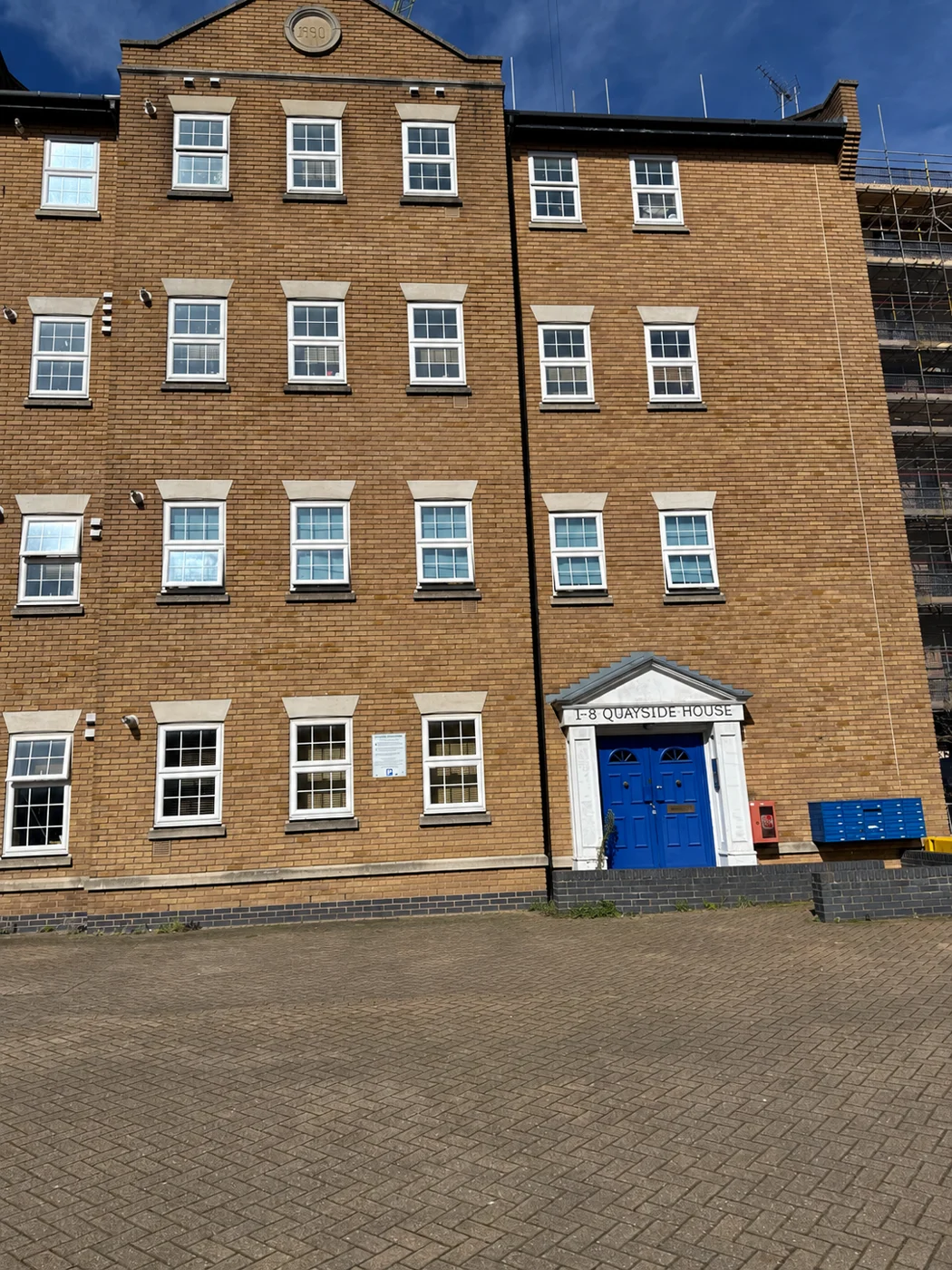
    Quay Side House in Barking, the location of Awais Sarwar’s inspection and follow-up case study
    Supplied project photograph. Parked cars were removed from the image; it is not an AI-generated building.

    First visit: identify and document

    The original survey took place on 19 March 2026. It recorded 29 inspected doors, six passing and 23 failing the recorded checks. The work covered findings across flat entrance and communal doors. The count is a baseline for this instruction; it does not imply that the same proportion of all doors in London is defective or that the original inspection tested every assembly’s fire resistance.

    Original report measureCount
    Doors inspected29
    Recorded as passed6
    Recorded as failed23
    Awais Sarwar’s supplied project account of the original Team EPC report; survey 19 March 2026.

    What the findings concerned

    The supplied account identifies issues involving gaps and alignment, intumescent strips and smoke seals, hinge fixings, self-closing action and a lockset. The report described findings door by door, supported by photographs and recommended actions. This enabled the management team to arrange work against specific observations rather than interpret an unexplained overall failure label. Do not infer additional defects or hidden construction problems beyond that supplied account.


    The buildings behind this advice

    AudiKiaGB NewsBudgensPepe's Piri PiriCar Giant

    From a report to a work schedule

    An inspection identifies what needs attention within scope; management then needs to arrange appropriate action. In this project, the schedule gave a practical basis for remedial work, including fit adjustments, attention to seals and fittings and correction of operational defects. This description is not an assertion that Fire Risk Specialists itself installed every replacement part or held a particular repair accreditation.

    Awais on the limit of the report

    Awais Sarwar’s supplied legislation guide, page 1. This applies to the general management process as well as this project: commissioning an inspection is one step, while maintenance and follow-through remain necessary.

    An inspection report alone does not repair a defective door or establish that the whole building is safe.

    Awais Sarwar, MSc — Fire Risk Assessor & Fire Safety Consultant, IFSM-registered, National Fire Risk Assessor Register ID 1576

    Return visit: the confirmed outcome

    Awais’s supplied confirmation says the identified items were subsequently addressed and that the team returned to review the remedial work and confirmed the relevant changes. No final visit date or revised numerical pass total is supplied here. We therefore do not invent one or overwrite the original six/23 figures with an unsupported “all doors passed” claim. The follow-up concerns the identified items, not whole-building approval.

    What this story does and does not show

    It shows a practical sequence: record defects, give recommendations, arrange action and review the changes. It does not establish a national failure rate, guarantee a particular fire-resistance rating or replace the building FRA. The photo’s appearance does not establish the statutory top-storey height, so no Regulation 10 threshold classification is inferred from it. The original report remains the baseline evidence for its own inspection.

    Keeping a useful action trail

    Managers can use consistent door IDs, retain the original findings, record work against each item and keep the relevant follow-up evidence. Mark access restrictions openly and do not confuse an appointment attempt with a completed check. Repair records and inspection records describe different things, and both may be needed to understand what changed. Ongoing duties continue after a follow-up visit.

    Planning a similar instruction

    Send your address, height information, door list, FRA and access coordinator. Explain whether you need a first inspection, review of known defects or a recurring programme. Agree the scope of findings, reports and included visits before booking; do not assume every extra appointment or repair is included. The Quay Side House figures are proof of the supplied project process, not a promise of the same findings or price at your building.

    Awais Sarwar, Fire Risk Specialists

    Material supplied by

    Awais Sarwar, MSc

    Fire Risk Assessor & Fire Safety Consultant

    8 min readFacts verified 16 October 2026

    Adapted from material supplied by Awais Sarwar on 14 October 2026; legal source links checked for this edition. No separate new technical review is claimed.

    Sources

    1. BS 9792:2025 housing fire risk assessment; conversion of withdrawn PAS 79-2:2020 — BSI
    2. Fire Safety (England) Regulations 2022: fire door guidance (revised August 2025) — GOV.UK
    3. Fact sheet: Fire doors (Regulation 10) — GOV.UK
    4. Regulation 10: fire doors — legislation.gov.uk
    5. Regulatory Reform (Fire Safety) Order 2005 — legislation.gov.uk
    6. Fire Safety Act 2021: commencement and scope — GOV.UK
    7. Section 156: fire safety responsibilities — GOV.UK
    8. Grenfell Tower Inquiry Phase 1: government response — GOV.UK
    9. Grenfell Tower Inquiry Phase 2: government response — GOV.UK
    10. Residential PEEPs: guidance for Responsible Persons — GOV.UK

    Was this page helpful?

    Frequently asked questions

    Call the team