BS 5839-1 covers non-domestic and communal systems, graded M (manual only) and L1-L5 by detector coverage, from L1 (detection everywhere, for maximum life safety) down to L5 (a specific localised risk). BS 5839-6 covers domestic systems in individual dwellings, graded LD1-LD3 by detector coverage and P1-P2 for property protection. The right category depends on the building's risk profile, layout and evacuation strategy, not a landlord's preference.
BS 5839-1:2017 covers fire detection and alarm systems in non-domestic premises, and in the communal parts of blocks of flats — corridors, stairwells, plant rooms, bin stores. BS 5839-6:2019 covers systems within individual domestic dwellings, whether a single house, an individual flat, or an HMO room. It is common, and often correct, for a single residential block to have both: a BS 5839-1 system protecting communal escape routes and plant areas, and independent BS 5839-6 detection inside each flat that does not necessarily connect to the communal system at all. Confusing the two, or assuming one covers the other, is one of the most frequent errors we see in fire risk assessments.
BS 5839-1 categories: M and L1-L5
Category M is a manual system only — call points and sounders, no automatic detectors — appropriate only where a fire would be discovered quickly by normal activity and staff are alert and mobile, such as some small, single-storey, low-risk workplaces. The L categories add automatic detection in increasing coverage, and are named for life safety, distinct from the P (property protection) categories used in the equivalent commercial standard, BS 5839-1 also covering P systems in the same document.
L1 — automatic detection throughout virtually the whole building, including most rooms and voids. The highest level of life-safety coverage, used where early warning everywhere is essential, for example large or complex premises, or high-risk sleeping accommodation.
L2 — as L1 but limited to defined areas of higher risk plus escape routes, rather than literally everywhere. Common in HMOs and some sheltered or supported housing.
L3 — detection in the escape routes and in rooms opening onto them, so a fire is detected before it can block the way out. A common minimum for many workplaces.
L4 — detection in escape routes only (corridors, stairways, circulation spaces). Lower cost, lower coverage, suitable for lower-risk, well-managed premises.
L5 — a bespoke category covering one or more specific fire hazards identified by the risk assessment (for example a plant room or a store), not a general coverage level. L5 is often used alongside another category to add targeted protection.
BS 5839-6 categories: LD1-LD3 and P1-P2
Inside individual dwellings, BS 5839-6 sets grades (the standard of equipment — mains-powered interlinked, or standalone battery, for example) and categories (the extent of coverage). The categories that matter day to day are LD1 to LD3.
LD1 — the most extensive domestic coverage: detectors in every circulation space that forms part of the escape route, plus every habitable room including bedrooms and living rooms. Often specified for higher-risk dwellings, larger properties, or where the risk assessment calls for it.
LD2 — detectors in circulation spaces that form escape routes plus any room presenting a higher fire risk, typically the kitchen and living room. This is the most commonly specified category for single let and HMO flats, and is often the practical minimum recommended by assessors.
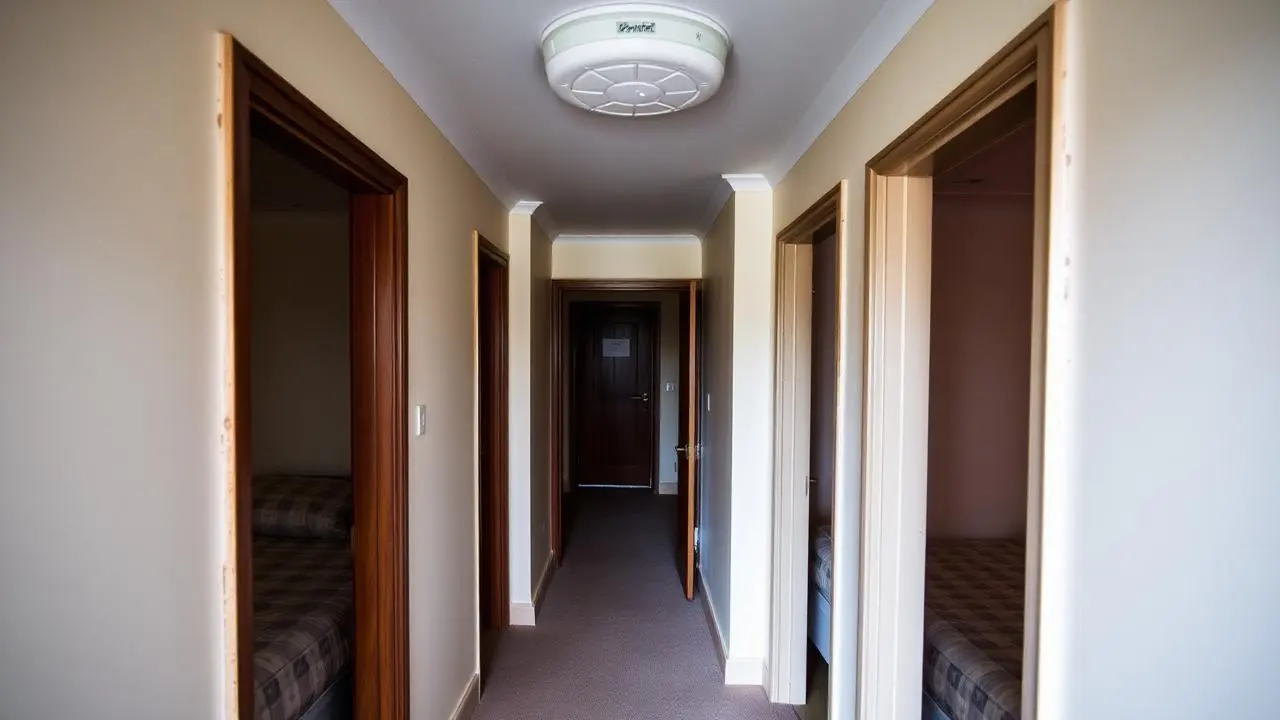
LD3 — detectors in circulation spaces that form escape routes only, the minimum generally acceptable standard, often found in older or lower-risk single-family dwellings.
P1 and P2 mirror LD1/LD2 in coverage terms but are aimed at protecting property rather than life, and are less relevant to residential landlord obligations.
Grade vs category
Grade describes the equipment quality and power source (for example Grade A, a fully engineered system, down to Grade D or F, mains-powered or battery standalone units). Category describes how much of the dwelling has detection. The two are chosen together, not interchangeably.
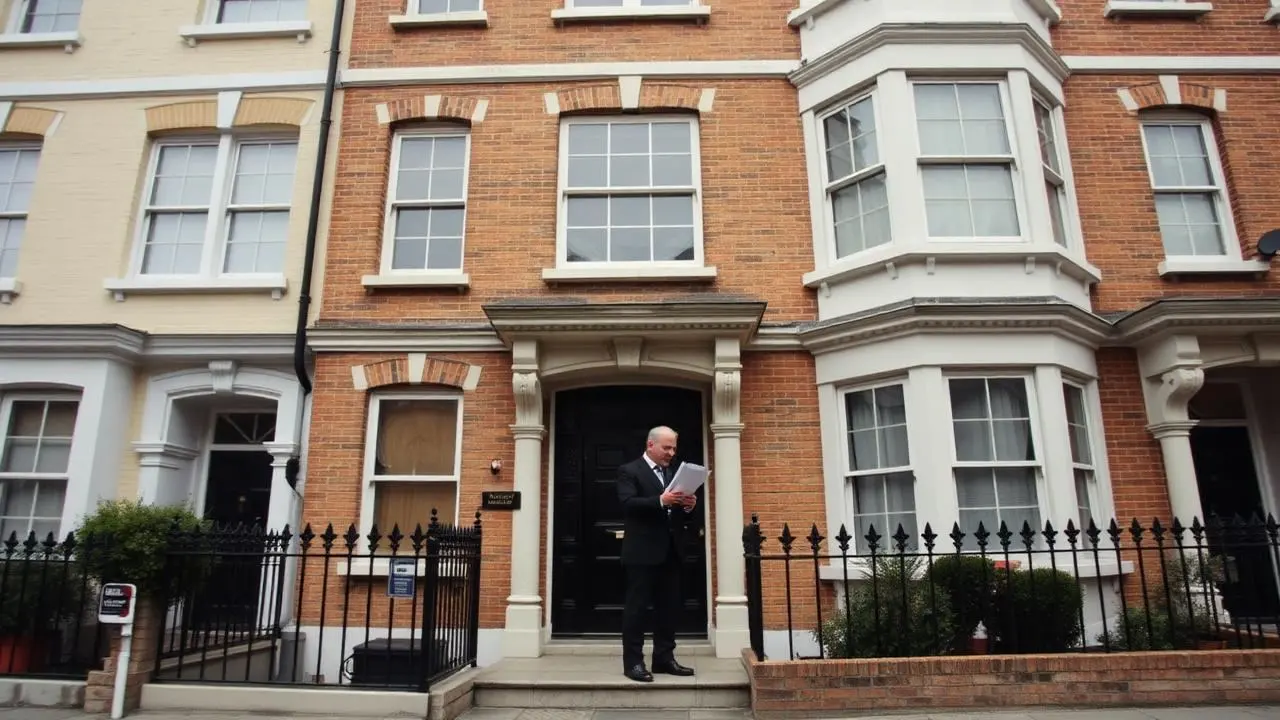
The buildings behind this advice
Which building needs which category
There is no single universal answer; the category should come out of the fire risk assessment, not a generic checklist. That said, some patterns are consistent across the sector. A licensed HMO will typically need at least LD2 in each unit of accommodation plus an L2 (or better) communal system with detection in escape routes and higher-risk rooms opening onto them. A purpose-built block of self-contained flats on a stay-put strategy often has a much more limited communal system — sometimes just detection in plant rooms, bin stores and communal lounges, category L5 or L4 — because the strategy relies on each flat's own front door holding back fire rather than communal-wide detection triggering a simultaneous evacuation. Sheltered and extra care housing, and buildings with vulnerable or immobile residents, generally need a higher category and more automatic detection than the equivalent building housing mobile, alert residents, reflecting the reduced ability of some occupants to respond to a manual alarm alone.
Building type
Typical in-flat category
Typical communal category
Purpose-built block, stay put
LD3 (owner-installed, out of scope)
L4/L5, plant and bin stores only
HMO, licensed
LD2 minimum
L2 in escape routes and risk rooms
Sheltered/extra care housing
LD1 or LD2
L1 or L2, higher coverage
Single-storey low-risk workplace
n/a
M or L4
Indicative patterns only — the category must be confirmed by a building-specific fire risk assessment.
Servicing, testing and who signs it off
BS 5839-1 systems need periodic professional inspection and servicing, generally on a six-monthly cycle carried out by a competent engineer, alongside weekly user tests of a call point (a different one each week) and a fully documented log book on site recording every test, false alarm and fault. BS 5839-6 domestic systems should have detectors tested regularly by the occupier (commonly monthly, per manufacturer instructions) and be checked as part of any fire risk assessment or planned landlord inspection; smoke alarms typically need replacing entirely after around ten years regardless of apparent condition, as the sensor itself degrades.
Six-monthly professional service of communal BS 5839-1 systems, carried out by a competent, ideally third-party certificated engineer (third-party certificated under a recognised scheme).
Weekly call point test, rotated around the building, logged in the fire log book with date, time and result.
Monthly user checks of domestic smoke and heat alarms, with batteries or units replaced as needed.
A written record of every false alarm, fault and remedial action — pattern of recurring faults or false alarms is itself a finding for the responsible person to act on.
Replacement of domestic smoke alarms at or before the manufacturer's stated end of life, commonly ten years.
Common category mistakes
The most common failure we see on site is a category mismatch that has drifted over time: an HMO converted from a single dwelling still running the LD3 system installed for the original family occupancy, with no upgrade to LD2 despite the change of use and licensing requirement. The second most common is a communal L1 or L2 system installed in a stay-put block without the fire engineering rationale to support full detection triggering a simultaneous evacuation signal, which can in some designs actively undermine the stay-put strategy rather than support it. Any change of use, layout, or occupancy type should trigger a review of whether the existing category is still correct, not just whether the existing system is working.
Wireless and hybrid systems
Wireless (radio-linked) detection has become far more common in occupied blocks over recent years, mainly because it avoids the disruption and cost of cabling through occupied flats and communal fabric that a wired upgrade would otherwise require. A correctly specified, third-party certificated wireless system can meet the same BS 5839-1 category as a wired one, but the installer needs to demonstrate signal strength testing across the building, a maintained battery replacement schedule for each device, and resilience against radio interference — none of which should be waved through on the basis that 'wireless is easier'. We treat wireless systems in older, thick-walled Victorian conversions with particular caution and always ask for the site survey evidence before accepting the specification.
Cause and effect, and interfacing with other systems
In anything beyond the simplest single-category system, a cause-and-effect matrix — a document setting out exactly what happens in the building when each specific detector or call point activates — becomes essential, particularly where the fire alarm interfaces with door-holders, smoke ventilation, lift recall, or a communal simultaneous evacuation sounder circuit. Without a clear matrix, staff, residents and even the maintaining engineer can be unsure whether a given alarm activation should trigger evacuation of one flat, one floor, or the whole building, which is precisely the kind of ambiguity that turns a manageable incident into a chaotic one.
Cost of installing or upgrading a system
Costs vary enormously with building size and existing infrastructure, but as a guide a straightforward communal upgrade in a small block often falls in a similar band to other fire safety works recommended from an assessment, while a full replacement system in a larger block, or a wireless retrofit across many flats, is a materially larger project that should be tendered and specified by a competent fire alarm designer rather than priced from a generic per-detector rate. Always ask for third-party certification evidence and a design certificate referencing the specific BS 5839 category being installed, not just an invoice describing 'fire alarm works'.
False alarms and nuisance activations
A category that is technically correct on paper can still fail in practice if it generates repeated nuisance activations, because residents and staff who have been woken or evacuated by false alarms several times in a month will start to treat every activation as probably false, which is exactly the complacency a life-safety system is meant to prevent. The most frequent causes we see are detectors sited too close to kitchens or bathrooms for the category installed, dust ingress in older sensors that have not been cleaned or serviced on schedule, and cheap or poorly maintained standalone detectors in HMO rooms reaching end of life and giving low-battery chirps or spurious triggers. Recording every false alarm in the log book, with its cause where known, lets the responsible person spot a pattern — a specific detector, a specific flat, a specific time of day — and fix the underlying cause rather than simply telling residents to expect it.
Site heat rather than smoke detectors in kitchens where cooking activity would otherwise trigger nuisance smoke alarms.
Use multi-sensor detectors in ambiguous locations such as open-plan kitchen-living spaces, reducing false triggers without cutting genuine coverage.
Keep to the manufacturer's cleaning and servicing schedule, since dust and insect ingress is a common cause of drifting detector sensitivity.
Replace standalone domestic detectors before, not after, their stated end-of-life battery or sensor life is reached.
Review any detector location generating repeated false alarms rather than simply resetting the panel each time.
Choosing an installer and ongoing maintenance contract
Specifying the correct category on paper only delivers real protection if the installation and the ongoing maintenance contract are equally sound, so it is worth treating the choice of installer as carefully as the choice of category. A competent installer should hold third-party certification relevant to fire detection and alarm systems, should provide a design certificate that explicitly states the category installed and the standard it was designed to, and should offer a maintenance contract that actually delivers the six-monthly service cycle rather than an annual visit dressed up as compliant. Landlords and managing agents should ask to see the installer's certification body and scope directly, rather than relying on a company's own marketing claim of competence, since this is one of the few checks that can be verified independently before signing a contract.