

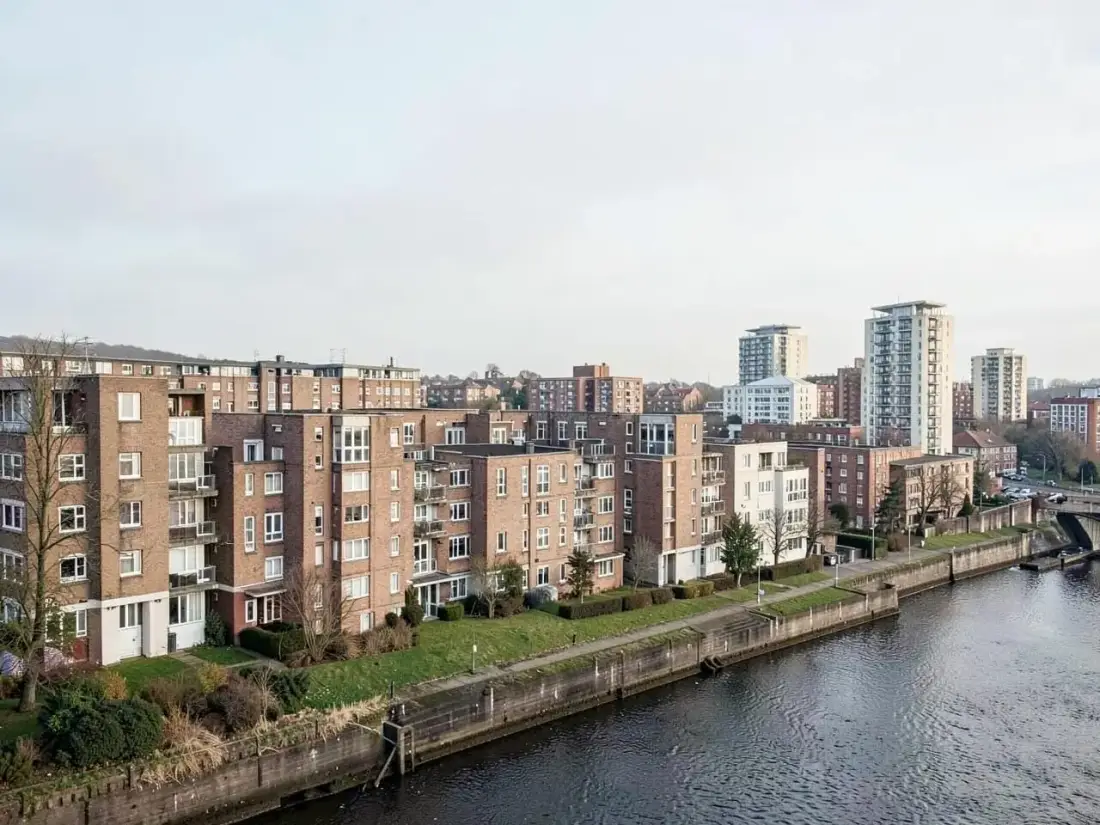




Housing stock in Barking and Dagenham
The borough mixes large 1920s and 1930s family houses — many now converted into flats or HMOs — with substantial post-war and estate regeneration schemes. Barking town centre has seen significant new-build residential development, while Dagenham and Becontree retain large areas of former council housing now under mixed ownership. The conversion of family homes into five or six-bedroom HMOs is one of the fastest-growing segments we assess here.
Licensing and HMOs in Barking and Dagenham
Barking and Dagenham operates additional licensing for HMOs across the borough, reflecting the rapid growth in shared housing. The council's licensing team is active, and we regularly produce reports formatted to its expected standard. Always confirm the current scheme boundary and renewal date with the council before submitting an application.
What we commonly find here
- 1920s and 1930s house conversions with single staircases serving multiple letting rooms
- Fire doors between letting rooms missing self-closers or intumescent strips
- Shared kitchens added to former reception rooms on the escape route
- New-build blocks requiring first annual review after handover
- Estate regeneration properties with mixed tenure and unclear responsible person arrangements
- Storage of bikes and household items in communal hallways
Working in Barking and Dagenham
Barking and Dagenham sits outside the ULEZ boundary and on-street parking is generally easier than in inner London. HMO landlords often self-manage, so we confirm access to every letting room at booking. New-build blocks near Barking town centre are usually managed by professional block managers. Reports are prioritised for 24-hour delivery where a licence deadline is involved.
Becontree's inter-war estate and its conversion pressure
The Becontree estate is one of the largest single areas of inter-war cottage housing in the country, built as a suburban low-rise estate for single-family occupation, and a meaningful share of it has since been split into flats or let as a small HMO to meet local rental demand. These houses were not designed with a protected escape route in mind because they were never intended for multiple households, so where a subdivision has taken place we routinely find a single kitchen or living room positioned to open directly onto the only hallway serving the upstairs bedrooms, plus original timber doors with no fire rating separating the flats from that hallway.
- Single-family cottage housing subdivided into flats with no protected hallway
- Original timber internal doors with no fire rating separating converted flats
Barking town centre and riverside regeneration
Barking town centre and the riverside development towards Barking Riverside have brought new mid-rise and high-rise residential blocks to the borough, several built as part of a long-term regeneration programme with shared amenity space and management arrangements that span multiple phases of construction. Because these developments are often built in phases, a block completed several years ago can sit immediately next to one only recently handed over, and it is worth confirming which fire strategy and evacuation approach applies to which specific building rather than assuming a uniform approach across the wider site.
Dagenham's industrial fringe and mixed occupancy
The industrial areas along the Dagenham riverside and towards Rainham have a mix of warehouse, light industrial and trade counter premises, some of which have had ancillary residential or live-work accommodation added informally over the years. Where a commercial unit includes any residential element, or where staff accommodation exists on an industrial site, this changes the fire safety duties involved and we make clear in scoping the visit which category of assessment applies. Emergency lighting and detection sized for an earlier industrial use of a building, rather than its current occupancy, is a frequent finding in this part of the borough.
What an assessment costs in Barking and Dagenham
Indicative prices in Barking and Dagenham
| Property | Typical scope | Price from |
|---|---|---|
| Becontree cottage house converted to 2-3 flats | Fire risk assessment, hallway and door separation review | from £140 |
| 1930s semi-detached HMO, Becontree or Chadwell Heath | HMO fire risk assessment, licence-ready report | from £99 |
| New-build block, Barking Riverside or Barking town centre | Fire risk assessment cross-referenced to phase-specific fire strategy | from £220 |
| Industrial or warehouse unit, Dagenham riverside | Commercial fire risk assessment | from £180 |
Your legal duty as a Barking and Dagenham responsible person
Under the Regulatory Reform (Fire Safety) Order 2005 and the Fire Safety (England) Regulations 2022, the freeholder, managing agent, landlord or employer must ensure a written fire risk assessment exists, is acted upon, and is reviewed at least annually. Buildings over 11 metres also require quarterly communal fire door checks, annual flat entrance door checks and wayfinding signage. We can deliver all of it in one visit.