





Fire RiskSpecialists

    18 metres and above

    Fire safety for higher-risk buildings from £899

    Fire risk assessments and evidence for London buildings above 18 metres or seven storeys: Building Safety Act duties, golden thread and resident engagement.
    IFSM registeredNFRAR listed24-hour reports£5M insured
    Fire safety for higher-risk buildings
    AudiKiaGB NewsBudgens
    The short answer

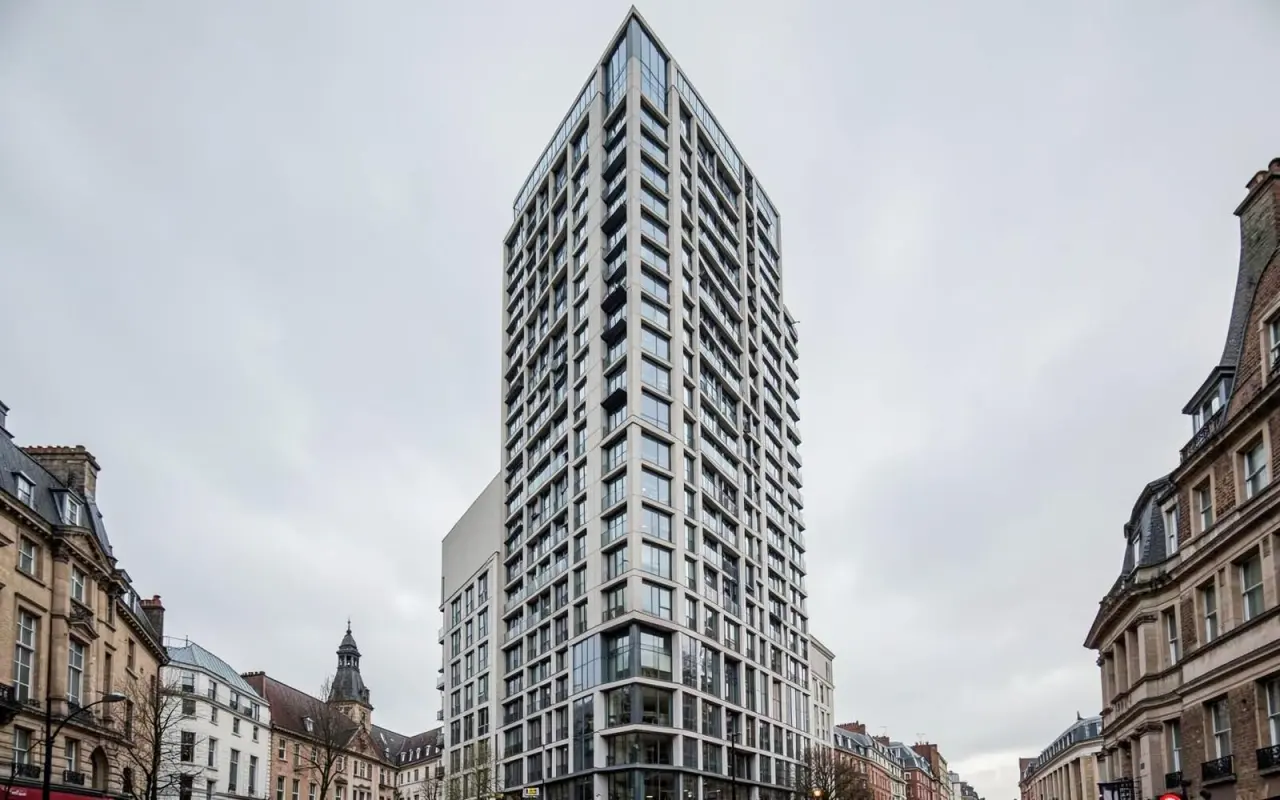
    A higher-risk building is one at least 18 metres tall or with at least seven storeys containing two or more residential units. Those buildings sit under the Building Safety Act as well as the Fire Safety Order, which means registration with the Building Safety Regulator, an accountable person, a safety case report, a resident engagement strategy and a mandatory occurrence reporting route. Fire Risk Specialists provide the fire risk assessment and the supporting fire safety evidence that a safety case is built on, working alongside the accountable person rather than replacing them.

    020 3951 4856

    £899

    Starting price, all inclusive

    24hr

    Written PAS 79 report

    1,000+

    Buildings assessed

    £5M

    Public liability insurance

    Threshold

    18m or 7 storeys

    With two or more residential units

    From

    £899

    Assessment for a higher-risk building

    Checks

    Monthly & quarterly

    Lifts, equipment and communal doors

    External walls

    Referred

    PAS 9980 appraisals by façade specialists

    What you get

    Everything included, nothing subcontracted.

    What is covered as standard on every assessment we carry out.

    Assessment plus evidence

    A PAS 79 assessment written so it can be lifted directly into a safety case report.

    Golden thread ready

    Findings, drawings and records structured so the building's information stays coherent over time.

    Honest about scope

    External wall appraisals to PAS 9980 are referred to specialist façade engineers — we do not overreach.

    Resident-facing material

    Plain-English information that supports the engagement strategy the Act requires.

    What counts as a higher-risk building

    The threshold is at least 18 metres in height or at least seven storeys, and the building must contain at least two residential units. Care homes and hospitals of that height are captured during design and construction but sit outside the occupation regime. The measurement runs from ground level to the finished floor of the top storey, ignoring roof plant, and it catches a surprising number of buildings that owners assumed were below the line. If you are unsure, the storey count is usually the quicker test.

    The duties that come with it

    Occupied higher-risk buildings must be registered with the Building Safety Regulator, and there must be a principal accountable person responsible for the structure and common parts. That person must assess and manage building safety risks — spread of fire and structural failure — prepare a safety case report demonstrating it, keep a resident engagement strategy, operate a complaints route, and report certain occurrences to the Regulator. None of that removes the Fire Safety Order duties; it sits on top of them.

    • Registration with the Building Safety Regulator
    • A named principal accountable person and, where ownership is split, accountable persons for each part
    • Safety case report demonstrating that building safety risks are being managed
    • Resident engagement strategy and a complaints handling route
    • Mandatory occurrence reporting for specified safety events
    • Fire Safety Order duties, including the 2022 Regulations, continuing in parallel

    Where the fire risk assessment fits

    The fire risk assessment is not the safety case, but the safety case cannot be written without it. It provides the evidence on compartmentation, means of escape, detection and alarm, firefighting provision, evacuation strategy and management arrangements that the safety case then argues about. We write assessments for these buildings knowing they will be read that way: each finding is tied to the risk it affects, limitations are stated explicitly, and the management arrangements section is written to be usable rather than boilerplate.

    The 2022 Regulations in a tall building

    Buildings above 18 metres carry the heaviest recurring duties: monthly checks of lifts and firefighting equipment with faults reported to the fire and rescue service, quarterly communal fire door checks and annual flat entrance door checks, a secure information box, wayfinding signage visible in low light, and floor plans and building plans provided to the fire and rescue service. These are the duties that fail most often, not because they are difficult but because they recur. We run them as a scheduled programme with the records held alongside the assessment.

    External walls — where we stop

    External wall appraisals under PAS 9980 require a specialist façade or fire engineer with the relevant competence, and we do not pretend otherwise. What we do is establish what is known about the wall build-up, identify where information is missing, record the effect that uncertainty has on the evacuation strategy, and refer you to a suitably qualified engineer where an appraisal is needed. Saying so plainly is more useful than a generalist opinion that a lender, insurer or regulator will not accept.

    Evacuation strategy under scrutiny

    Stay-put is the default in purpose-built blocks, but it depends entirely on compartmentation holding. Where the assessment finds breached compartmentation, defective flat entrance doors or an unresolved external wall question, stay-put has to be challenged, and the alternative — usually a temporary simultaneous evacuation arrangement with an interim alarm and possibly a waking watch — has to be costed and time-limited. We set out the conditions under which the interim measure can be withdrawn, so it does not quietly become permanent.

    Residents are part of the system

    The Act treats residents as participants rather than an audience. They must be given information about the building's safety measures, be able to raise concerns and have those handled, and — for buildings above 11 metres — receive fire safety instructions annually. Residents also carry duties of their own: not to damage safety items and to allow access for checks. We provide the plain-English material for all of this, because engagement written in regulatory language does not engage anyone.

    What it costs

    Fire risk assessments for higher-risk buildings start at £899 and are quoted on storeys, unit count, plant and the depth of evidence required. Safety case fire safety evidence packs, recurring 2022 Regulations checks and resident material are quoted alongside. Registration with the Regulator and the safety case report itself remain the accountable person's legal responsibility — we supply the fire safety evidence that makes them defensible, and we say so rather than implying we can discharge duties that are not ours to discharge.


    Scope and price

    What it costs and how it runs.

    Indicative bands, confirmed as a fixed price before we book anything in.

    Indicative prices

    PropertyTypical scopePrice from
    18m+ block, single corePAS 79 assessment of common parts and plant£899–£1,499
    Large or multi-core towerAssessment across all cores and shared areas£1,499–£2,500
    Safety case fire evidence packFire safety evidence structured for the safety caseQuoted on scope
    2022 Regulations programmeMonthly, quarterly and annual checks with recordsQuoted annually
    Resident information packPlain-English instructions and door informationIncluded with programmes
    Bands only — every building is priced on floors, units and complexity.

    From enquiry to report

    1. Information reviewWeek 1

      Drawings, previous reports, wall information and existing records reviewed.

    2. Survey1–2 days

      Common parts, cores, risers, plant and firefighting provision, with a flat sample where agreed.

    3. Assessment3–5 working days

      PAS 79 report with limitations stated and each finding tied to the risk it affects.

    4. Evidence packFollowing the report

      Fire safety evidence structured for the safety case, where commissioned.

    5. Ongoing checksRolling

      Recurring 2022 Regulations duties scheduled with records held together.

    The difference

    Us versus a typical assessment.

    Most of the reports we are asked to review were produced remotely, from a template, by someone who never saw the building.
    Comparison between Fire Risk Specialists and a typical commodity fire risk assessment for Higher-risk buildings
    AspectFire Risk SpecialistsTypical assessment
    Safety case fitAssessment written to feed the safety case directlyStandalone report needing rework
    External wallsScope stated honestly, referred to specialist engineersVague generalist opinion
    LimitationsStated explicitly where access or information was missingOmitted
    Interim measuresWithdrawal conditions defined and time-limitedWaking watch left open-ended
    Recurring dutiesScheduled programme with records in one placeLeft to the client to remember
    Resident materialPlain English, ready to issueRegulatory language nobody reads

    Instant estimate

    What it will cost.

    The same price bands our assessors quote from. Move the property count for portfolio pricing — from two properties upwards the rate drops.
    1. What kind of property?
    2. Which best describes it?

    1 property

    Your estimate

    £449–£1,899

    6+ Storey Communal · excluding VAT

    • Written report to British Standards PAS 79, within 24 hours of the visit.
    • Priced on floors, units and complexity — never on a call-out clock.
    • Fixed price confirmed in writing before we book the survey.
    020 3951 4856

    Estimates are guide bands, not a quotation. Unusual layouts, sprinklers, plant rooms or heritage fabric can move the figure either way.

    Before you book

    The honest answers.

    The six things people ask us before instructing — answered without the sales pitch.

    I have been quoted less elsewhere.

    Cheaper quotes are usually desktop reviews or template reports written without a site visit. Ours starts at £99 and always includes an assessor physically walking the building. If you have a cheaper written quote for the same scope, send it over and we will tell you honestly whether it covers you.

    I need it this week.

    Most visits are booked within a few working days and the written report follows within 24 hours of the assessor leaving site. If you have a licensing deadline, an insurer or a fire service inspection date, tell us the date when you enquire and we will work to it.

    How do I know the assessor is competent?

    Every assessment is carried out by an IFSM-registered assessor listed on the National Fire Risk Assessor Register — ours is ID 1576. Competence is exactly what an enforcing authority asks about first, and it is the one thing a cheap report cannot evidence.

    Will the report actually be usable?

    It is written in plain English to British Standards PAS 79, with every finding tied to the duty it satisfies and a prioritised action plan you can hand to a contractor or a managing agent without translation.

    I have more than one building.

    Portfolios are what we do most. One visit schedule, one reporting format, one renewal calendar, and pricing that drops from the second property onwards.

    What if something is found?

    Findings are ranked so you know what has to happen now, what can be planned, and what is advisory. We do not inflate a report to sell remedial work — and we will talk you through the actions on the phone at no cost.

    How it works

    From enquiry to compliant.

    1. 01

      Quote

      Priced in minutes, online or over the phone.

    2. 02

      Book

      Survey slots within days, same-day when urgent.

    3. 03

      Assess

      An in-house assessor attends and inspects in person.

    4. 04

      Report

      PAS 79 report and prioritised actions in 24 hours.

    The assessor behind the report

    Fire safety, run by an actual human

    Every higher-risk buildings instruction is carried out in person by an IFSM-registered assessor — never passed to a subcontractor.

    IFSM Registered

    Institution of Fire Safety Managers

    NFRAR ID 1576

    National Fire Risk Assessor Register

    1,000+ Assessments

    Across London and the South East

    Awais Sarwar

    Founder & Managing Director

    About Awais
    Awais Sarwar, Founder and Managing Director of Fire Risk Specialists

    Trusted by the teams we work for across London

    Audi
    Kia
    Car Giant
    GB News
    Budgens
    Pepe's Piri Piri
    Chicking
    Chaiwalla
    Zoomo
    Northwood
    Audi
    Kia
    Car Giant
    GB News
    Budgens
    Pepe's Piri Piri
    Chicking
    Chaiwalla
    Zoomo
    Northwood

    Frequently asked questions

    More from us

    Related services.

    Areas we cover

    All 32 London boroughs, plus Essex, Kent, Surrey and Hertfordshire.

    Book your higher-risk buildings from £899.

    Tell us about the building and we will price it in minutes. In-house IFSM-registered assessors, PAS 79 report within 24 hours of the visit.
    020 3951 4856

    No obligation. We answer the same day.

    Last word

    Ready when you are.

    Quote in 60 seconds. Assessor on site this week. Compliant report in your inbox within 24 hours. That's the whole process.

    020 3951 4856
    Transparent pricing No obligation 1,000+ assessments 100% compliance guarantee
    Awais Sarwar
    — Awais Sarwar, MSc
    MD · 4.9 Google
    4.9 rated
    ·1,000+ done·
    Guaranteed
    Call