

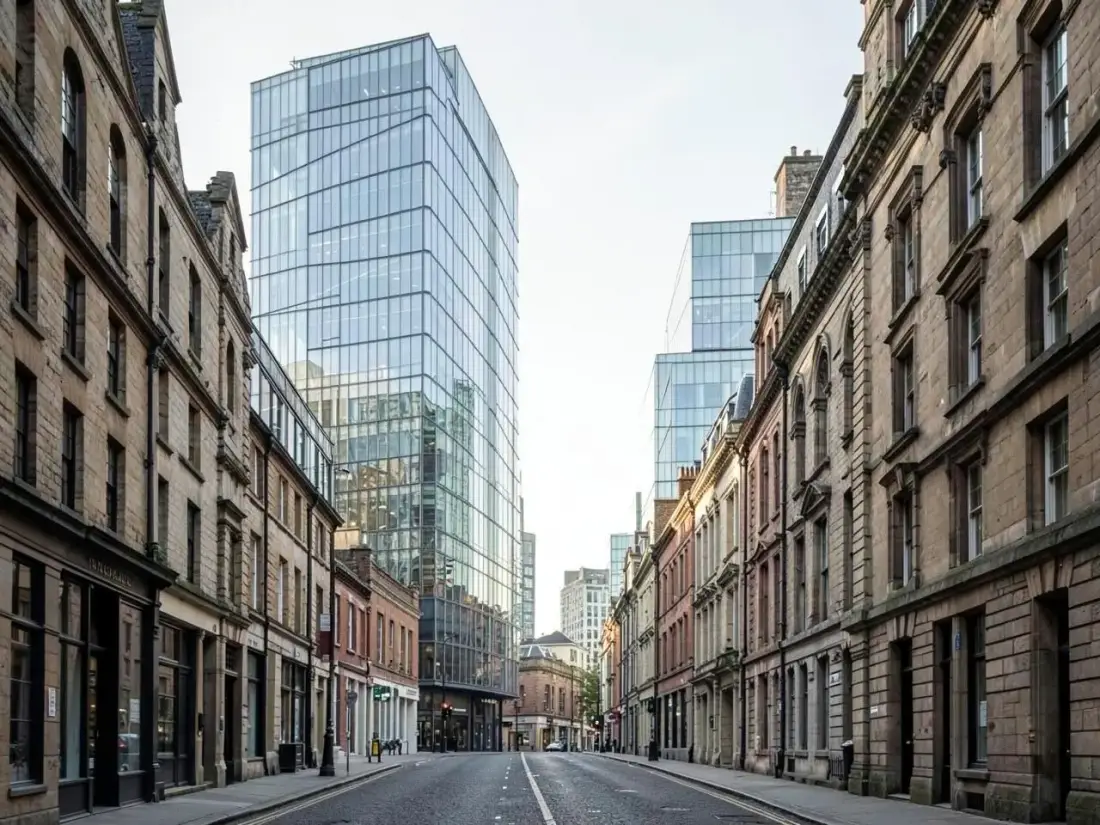




Housing stock in City of London
The City is overwhelmingly commercial, with high-rise office towers, historic livery halls, retail and hospitality at ground floor, and a small but significant residential population in the Barbican and Golden Lane estates. Many buildings are listed or sit within conservation areas, which constrains fire door replacement, signage and structural alterations. Modern office buildings generally have sophisticated fire engineering strategies including phased evacuation and addressable alarm systems.
Licensing and HMOs in City of London
HMO licensing is largely irrelevant in the City because the residential population is small and concentrated in purpose-built estates. Commercial premises are regulated under the Fire Safety Order, and the City of London Corporation's fire safety team is the enforcing authority. Listed building consent may be needed for fire safety works in historic premises.
What we commonly find here
- Listed commercial buildings with fire doors and signage constrained by heritage requirements
- High-rise offices with complex phased evacuation strategies that need regular review
- Historic basements and vaults with limited escape routes and storage hazards
- Mixed-use buildings where residential and commercial fire strategies interface
- Fire alarm systems specified for previous tenants and not reviewed after fit-out changes
- After-hours access and security arrangements that affect evacuation drills
Working in City of London
The City sits within the Congestion Charge and ULEZ zones, and on-street parking is extremely limited. We typically use nearby car parks or public transport and allow extra time for security and access procedures. Many City buildings have strict access protocols, so we coordinate with building managers well in advance. Reports are delivered within 24 hours, and we can schedule surveys outside normal trading hours to minimise disruption.
Livery halls and historic buildings in daily commercial use
The Square Mile contains a concentration of historic livery halls, guild buildings and listed commercial premises unmatched anywhere else in London, many still in continuous daily use for offices, events and hospitality alongside their heritage function. These buildings routinely combine original stone or timber staircases, panelled rooms with restricted alteration options, and modern office fit-outs layered in over decades, so an assessment has to work out where original fabric genuinely limits what can be done and where a previous fit-out has simply never been reassessed since it was installed. Function and event use adds a further dimension, since occupant numbers and layout can change from one booking to the next, and the fire strategy needs to remain valid across all of them.
- Original stone or timber staircases in listed livery halls with restricted alteration options
- Function and event use requiring the fire strategy to hold across varying occupant numbers and layouts
The City's tower cluster and mixed office occupation
The cluster of tall commercial towers around Bishopsgate, Leadenhall Street and the eastern City — buildings let floor by floor to multiple tenants — brings a distinct set of considerations: fire strategy responsibility is often split between a building-wide landlord assessment and individual tenant fit-out assessments on each floor, and the interface between the two needs to be clearly understood before either report can be relied upon. Multi-tenanted floors also see frequent fit-out changes as tenants come and go, so a floor's fire compartmentation and escape route can shift meaningfully between one lease and the next without necessarily being reflected in the building-wide documentation.
Barbican and the City's small residential population
The Barbican Estate and a handful of other residential pockets represent a genuinely unusual position within the City: a substantial concentration of tall, architecturally significant residential towers and terrace blocks sitting inside a local authority area otherwise dominated by commercial premises. Barbican's raised podium walkways, communal plant areas and Brutalist concrete construction bring their own compartmentation questions, and because the estate is managed as a single large complex, an assessment often needs to reference how the wider estate's fire strategy and any interim measures apply to the specific block being visited.
Access and security across the Square Mile
Working across the City means factoring in security arrangements that are more involved than in most residential boroughs: many commercial buildings require visitor registration, ID checks or an escort from reception, and access to plant rooms or risers in a multi-tenanted tower can require coordination between the landlord's facilities team and an individual tenant. We confirm these arrangements at booking so the visit itself is not held up on site, and we allow additional time where a building spans several tenanted floors that each need a separate point of contact.
What an assessment costs in City of London
Indicative prices in City of London
| Property | Typical scope | Price from |
|---|---|---|
| Livery hall or historic guild building | Fire risk assessment with heritage-proportionate recommendations | from £220 |
| Single floor, multi-tenanted office tower | Tenant fit-out fire risk assessment | from £180 |
| Whole-building landlord assessment, City office tower | Fire risk assessment, common parts and core review | from £320 |
| Barbican or other City residential block | Fire risk assessment, communal podium and stairwell review | from £180 |
| Function venue or event space within a historic building | Fire risk assessment covering variable occupant loads | from £220 |
Your legal duty as a City of London responsible person
Under the Regulatory Reform (Fire Safety) Order 2005 and the Fire Safety (England) Regulations 2022, the freeholder, managing agent, landlord or employer must ensure a written fire risk assessment exists, is acted upon, and is reviewed at least annually. Buildings over 11 metres also require quarterly communal fire door checks, annual flat entrance door checks and wayfinding signage. We can deliver all of it in one visit.