

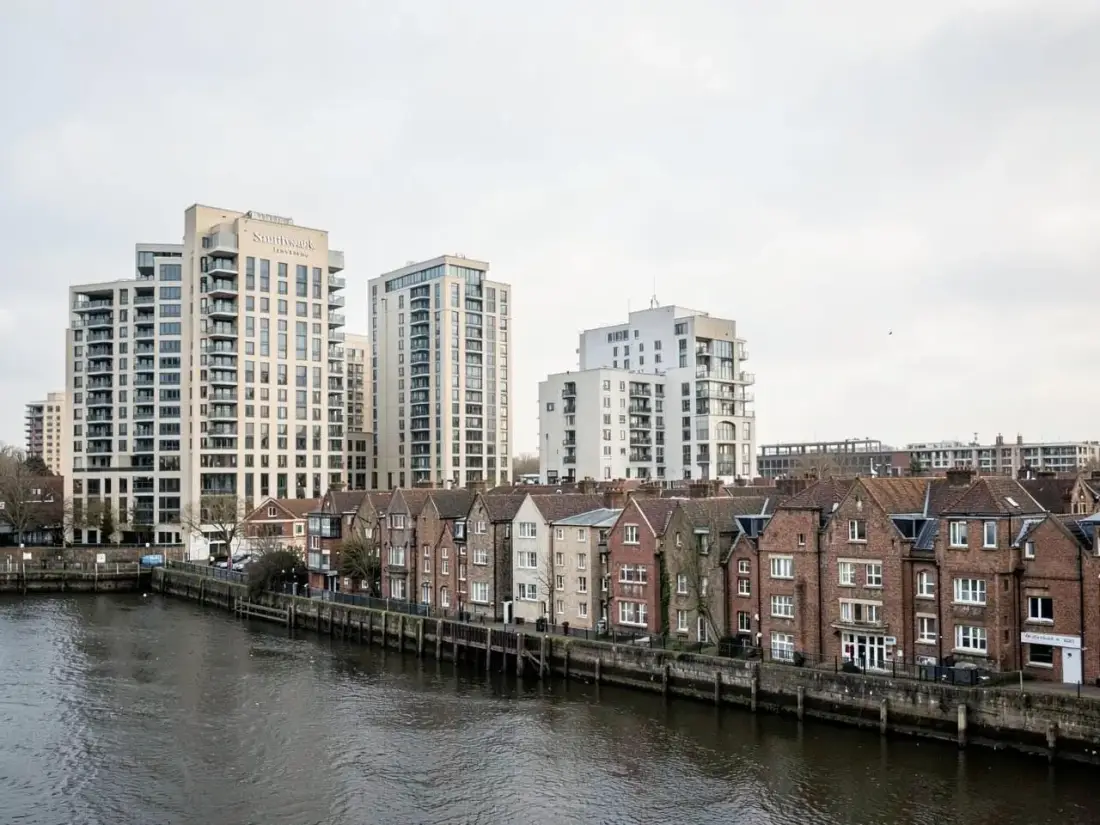




Housing stock in Southwark
Elephant and Castle, London Bridge and the riverside around Bermondsey have seen sustained high-rise regeneration, producing new residential towers alongside older post-war estate blocks that are still awaiting refurbishment or replacement. Peckham and Camberwell retain large stocks of Victorian terraces converted into flats and HMOs, many above shopfronts along Peckham Rye and Camberwell Church Street. Dulwich, by contrast, is dominated by larger detached and semi-detached houses, some converted into a small number of flats but many still in single-family use. Mixed-tenure blocks — part leasehold, part social rent, sometimes part market rent — are common across the borough's regeneration sites, which regularly raises the question of who the responsible person actually is.
Licensing and HMOs in Southwark
Southwark has operated additional and selective licensing for HMOs and privately rented houses in defined areas in the past, with boundaries and conditions subject to periodic review, so check the current scheme status directly with the council before an application. Where a building has mixed leasehold and rented tenure, we flag the responsible person question explicitly in the report rather than assuming it based on tenure alone.
What we commonly find here
- Mixed-tenure regeneration blocks where responsibility for common parts is unclear between the freeholder, management company and individual leaseholders
- Post-war estate blocks with historic fire door replacements of inconsistent certified rating
- Victorian terrace HMOs above shopfronts on Peckham Rye with kitchens on the single escape route
- External cladding or insulation of uncertain composition on 1960s–1980s estate blocks awaiting review
- Communal bin and cycle storage narrowing protected routes in converted terraces
- Loft or rear extensions in Dulwich houses altering escape strategy without a corresponding update to the assessment
Working in Southwark
Elephant and Castle and London Bridge sit inside ULEZ and have limited on-street parking, so we typically use a nearby car park for those visits, while Dulwich and Peckham are somewhat easier for street parking outside peak hours. Regeneration sites often have on-site concierge or estate management teams who can provide previous fire risk assessments and building safety case information ahead of the visit, which speeds things up considerably. Older estate blocks are usually managed by the council directly, so access needs coordinating with the local housing office. Straightforward blocks receive a written report within 24 hours of the visit.
Elephant and Castle's regeneration towers
The scale of regeneration around Elephant and Castle means new residential towers frequently sit directly alongside older estate blocks scheduled for refurbishment or eventual replacement, sometimes sharing a single development site with different phases completed years apart. Mixed-tenure arrangements here, part leasehold, part social rent, occasionally part market rent within the same block, regularly raise the question of exactly who holds the article 9 duty as responsible person, particularly where a management company has been appointed but individual leaseholders retain some repairing obligations. We set out clearly in the report where this needs formal clarification rather than assuming it based on tenure mix alone.
Peckham and Camberwell's shopfront terraces
Peckham Rye and Camberwell Church Street carry a substantial run of Victorian terraces with retail below and flats or HMOs above, similar in character to the shopfront conversions found across several inner boroughs but with a notably high concentration of food retail and takeaways generating consistent kitchen extract and grease-related fire loading. We check extract cleaning records and ducting condition as a specific line of enquiry in these buildings, since a poorly maintained commercial kitchen extract is one of the more serious fire risks we encounter in mixed-use terraces of this type, with direct consequences for the flats above.
- Kitchen extract ducting and grease build-up in food retail units below residential flats
- Extract cleaning records checked as part of the commercial-residential interface review
Dulwich's larger converted houses
Dulwich, in contrast to the rest of the borough, is dominated by larger detached and semi-detached Victorian and Edwardian houses, many still in single-family occupation but a growing number converted into two or three flats to meet demand near the borough's schools and the South Circular corridor. Where a large house has been converted, rear and side extensions added since conversion are the recurring complication, since they frequently alter the escape route from an upper floor or block what was originally a secondary means of escape through a rear garden, without anyone updating the fire risk assessment to reflect the change.
What an assessment costs in Southwark
Indicative prices in Southwark
| Property | Typical scope | Price from |
|---|---|---|
| Mixed-tenure regeneration block, Elephant and Castle | Fire risk assessment with responsible person clarification | from £220 |
| Flat above food retail unit, Peckham or Camberwell | Fire risk assessment including kitchen extract review | from £140 |
| Detached or semi-detached house conversion, Dulwich | Fire risk assessment with extension and escape route review | from £150 |
| Post-war estate block, Bermondsey | Fire risk assessment, communal areas and fire door audit | from £180 |
| HMO conversion, Peckham Rye | HMO fire risk assessment, licence-ready report | from £99 |
Your legal duty as a Southwark responsible person
Under the Regulatory Reform (Fire Safety) Order 2005 and the Fire Safety (England) Regulations 2022, the freeholder, managing agent, landlord or employer must ensure a written fire risk assessment exists, is acted upon, and is reviewed at least annually. Buildings over 11 metres also require quarterly communal fire door checks, annual flat entrance door checks and wayfinding signage. We can deliver all of it in one visit.