

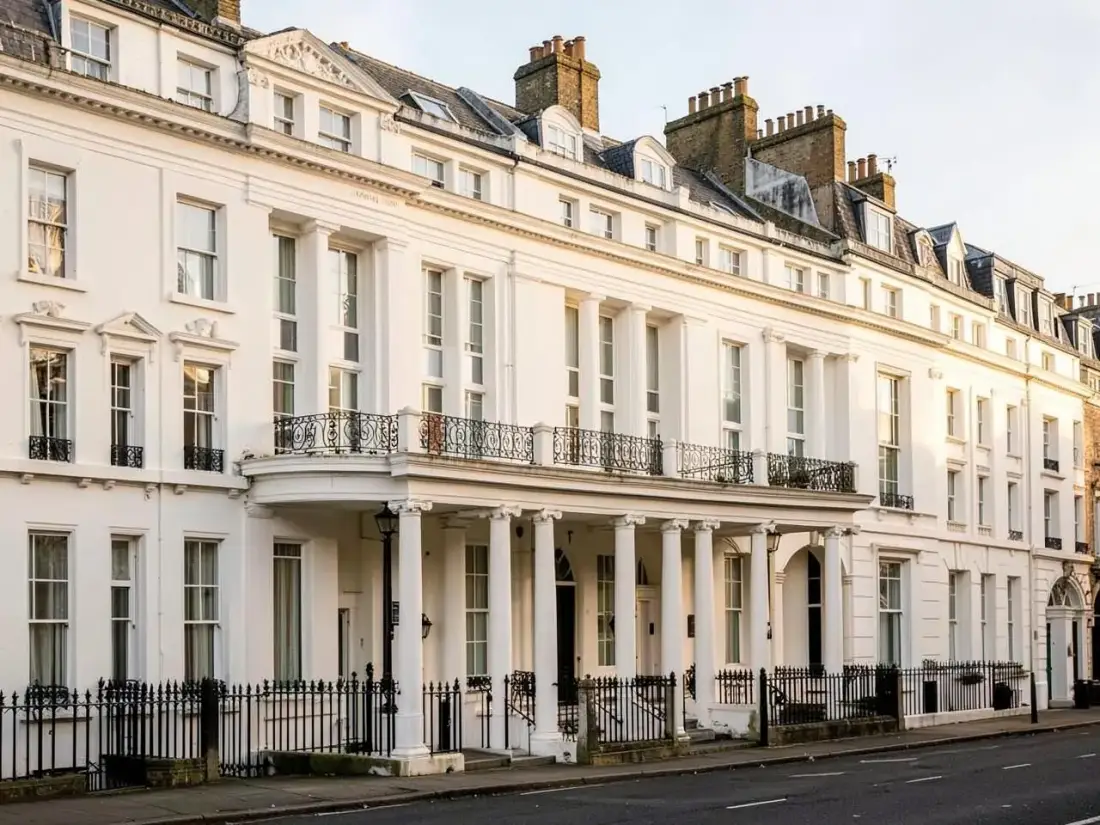




Housing stock in Kensington & Chelsea
The borough is dominated by Victorian and Edwardian mansion blocks, garden squares and terraced houses converted into high-value flats, often with a single staircase and limited scope for structural alteration. Chelsea, Kensington and Knightsbridge have substantial listed stock. Notting Hill and North Kensington contain dense Victorian terraces, many converted into flats and HMOs. New development is limited and generally high-end, with modern fire engineering.
Licensing and HMOs in Kensington & Chelsea
Kensington and Chelsea has operated additional licensing for HMOs in parts of the borough. Given the high value and mixed tenure of much of the stock, confirm the current scheme boundary and conditions with the council before submitting an application. Listed building consent is frequently required for fire safety works in this borough.
What we commonly find here
- Listed and conservation-area buildings where fire door and signage upgrades must be sensitively justified
- Mansion blocks with single staircases serving multiple storeys and no secondary escape
- High-value flat conversions with original timber doors lacking certified fire rating
- Shared hallways in Victorian terraces used for storage
- Basement and lower-ground flats with limited natural ventilation and escape options
- Mixed commercial-residential buildings on high streets with ground-floor risk affecting flats above
Working in Kensington & Chelsea
Kensington and Chelsea sits within the Congestion Charge and ULEZ zones, and on-street parking is extremely limited. We typically use nearby car parks or public transport and allow extra time for access. Many buildings have porters or managing agents who hold detailed building history. Reports are delivered within 24 hours of the visit.
Notting Hill and North Kensington's dense terrace conversions
North Kensington and the streets around Golborne Road and Ladbroke Grove have a dense stock of Victorian terraces converted into flats and HMOs, a markedly different profile from the mansion blocks and garden squares further south and east. These conversions frequently have a single staircase serving four or more flats, original timber doors that were never fire-rated, and shared hallways used for bike and refuse storage that narrow what is often already a tight escape route. Given the borough's history, we treat findings in this part of the borough with particular care and always frame recommendations as clear, prioritised actions with the reasoning behind each one set out in plain terms, so a landlord or managing agent can see exactly what needs doing and why.
- Single staircases serving four or more converted flats
- Original timber flat entrance doors with no certified fire rating
- Shared hallway storage narrowing an already limited escape route
Basement and lower-ground flats
A significant number of conversions across the borough, particularly in Chelsea, Kensington and Notting Hill, include a basement or lower-ground flat with limited natural ventilation and a single means of escape via an internal stair or a narrow lightwell. These flats need particular attention to smoke alarm coverage and, where a lightwell is the secondary escape route, confirmation that it is not obstructed by bins, planters or bike storage and that any grille or gate can be opened from the inside without a key. Basement conversions added more recently as part of larger extension works also raise questions about fire separation from the flats above that we check specifically rather than assuming compliance because the work was recently completed.
High streets and mixed commercial-residential buildings
Kensington High Street, the King's Road and the parades around Notting Hill Gate combine ground-floor retail, restaurants and offices with residential flats above, and the interface between the two uses is a recurring theme in our assessments here. Restaurant extraction and storage arrangements, in particular, can materially affect the fire risk to the residential floors above if ducting runs through shared risers or if fire doors between commercial and residential parts of a building are not maintained. We assess this interface explicitly, and where the commercial tenant is on a separate lease, we note where responsibility for a given finding is likely to sit so the freeholder or managing agent can act on it efficiently.
What an assessment costs in Kensington & Chelsea
Indicative prices in Kensington & Chelsea
| Property | Typical scope | Price from |
|---|---|---|
| Victorian terrace conversion, North Kensington or Notting Hill | Fire risk assessment, communal areas and door review | from £150 |
| Basement or lower-ground flat as part of wider conversion | Fire risk assessment with escape route and ventilation review | from £120 |
| Listed mansion block flat, Chelsea or Kensington | Fire risk assessment with heritage-proportionate recommendations | from £180 |
| Mixed commercial-residential building, high street parade | Fire risk assessment covering commercial-residential interface | from £220 |
| HMO conversion, Notting Hill or North Kensington | HMO fire risk assessment, licence-ready report | from £99 |
Your legal duty as a Kensington & Chelsea responsible person
Under the Regulatory Reform (Fire Safety) Order 2005 and the Fire Safety (England) Regulations 2022, the freeholder, managing agent, landlord or employer must ensure a written fire risk assessment exists, is acted upon, and is reviewed at least annually. Buildings over 11 metres also require quarterly communal fire door checks, annual flat entrance door checks and wayfinding signage. We can deliver all of it in one visit.