





What social landlords are actually judged on
Since Grenfell, the questions asked of registered providers have shifted from whether an assessment exists to whether the whole system works: is the assessment current, was the assessor competent, did the actions get done, were residents told, and can all of that be shown quickly. The Regulator of Social Housing's consumer standards expect landlords to know the condition of their homes and to act on health and safety risks, and the Building Safety Act adds specific obligations for buildings above 18 metres. An out-of-date fire risk assessment is rarely the only finding when something goes wrong — it is usually the thread that leads to the rest.
Stock that comes with complications
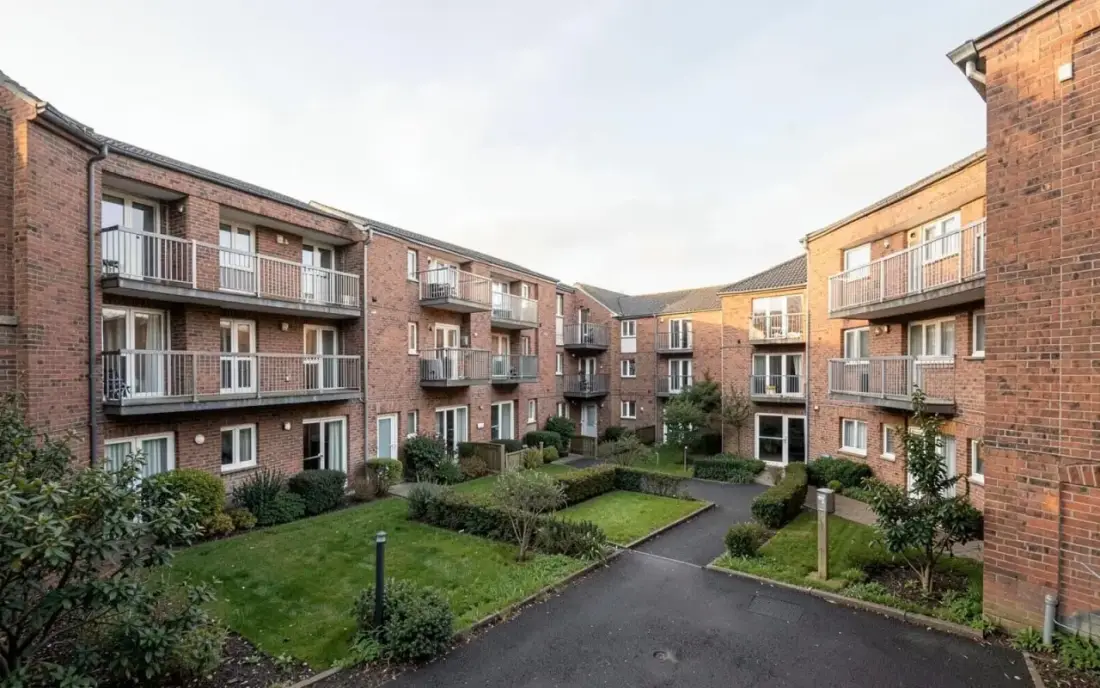
Social housing stock is rarely uniform. A single association can hold 1960s slab blocks, converted street properties, sheltered schemes, supported housing, temporary accommodation and a handful of commercial units under residential flats. Each of those changes the assessment: sheltered and supported schemes need personal emergency evacuation planning and a hard look at whether stay-put remains realistic for the residents actually living there; converted street properties often have compartmentation that cannot be verified without opening up; mixed-use buildings need the commercial risk considered as an ignition source for the homes above.
- General needs blocks — stay-put viability, communal door condition, riser integrity
- Sheltered and supported schemes — evacuation capability, PEEPs, staffing arrangements
- Street properties and conversions — compartmentation history, escape route from upper floors
- Temporary accommodation — higher occupancy churn, fire safety information for new residents
- Mixed-use blocks — commercial risk transferring to the dwellings above
- Buildings above 18 metres — safety case evidence, secure information box, monthly checks
Reports written for three different readers
A housing association's fire risk assessment gets read by a compliance manager who needs the action list, a surveyor who needs enough detail to price the work, and — increasingly — a resident or a councillor who wants to know if their building is safe. Reports that only serve the first reader create work for everyone else. We write findings in plain English, state the specific duty each action satisfies, and separate immediate risk from planned improvement so the priority is obvious without interpretation.
Getting the action plan into the works programme
Most compliance failures are not assessment failures — they are follow-through failures. Actions are recorded, then sit unpriced because nobody owns them. Our reports set out each finding with a priority band and a plain description of the remedy, which is what a planned works team needs to build a schedule of rates against. Where the same finding appears across many buildings — typically flat entrance doors, emergency lighting or self-closers — the portfolio summary groups them so the association can procure one programme rather than 40 individual jobs.
Regulation 10 and the recurring duties
For buildings above 11 metres the 2022 Regulations require quarterly checks of communal fire doors and annual best-endeavours checks of flat entrance doors, and for all buildings with two or more domestic premises, fire safety instructions must go to residents and be repeated annually. These are the duties most likely to be missed, because they recur rather than happening once. We run them as a scheduled programme alongside the assessments, with the records held in the same place as the reports so an evidence request can be answered in one go.
Access into tenanted homes
Where an assessment extends into dwellings — for door checks or a Type 3 assessment — access is the constraint, not the survey. Best endeavours has to be genuinely evidenced: letters, repeat visits, appointment offers, and a record of refusals. We provide the resident notice templates and log every attempt, so the association can show what was done rather than simply reporting a low completion percentage. Where access is persistently refused on a door that matters, the report says so plainly and recommends the escalation route.
Evidence packs for boards and regulators
Associations increasingly need to answer questions at short notice: from the Regulator of Social Housing, from a local authority, from an insurer, or from their own board's audit committee. Alongside the individual reports we provide a stock-level summary — buildings assessed, risk ratings, actions open and closed, review dates and any building where access or information gaps limited the assessment. It is deliberately honest about gaps, because a summary that hides them is worthless the moment somebody looks behind it.
Working with your existing contractors
Most associations already have alarm, lighting and door contractors under framework agreements. We are not trying to displace them. The assessment identifies what needs doing and to what standard; your contractors do the work; we can re-inspect and sign off that the finding is genuinely closed, which is the step most often skipped. Where you would rather we carried out the remedial work, we quote separately and transparently, and findings are never inflated to create it.
What it costs across a stock
Pricing follows storeys, units and complexity: from £149 to £349 for a two-storey block, £349 to £449 for three to six storeys, and from £449 upwards for taller or mixed-use buildings, with programme discounts of up to 15% across a stock. Sheltered and supported schemes are priced individually because evacuation planning and staff interviews add time. Everything is fixed in writing before the first visit, and invoiced per building so costs can be allocated to the right scheme.