Under the Fire Safety Order 2005, the responsible person is whoever has control of the premises in connection with their trade, business or undertaking — for a workplace this is usually the employer, and for a block of flats or HMO it is usually the freeholder, or a managing agent or landlord who has been given control of the common parts. There can legally be more than one responsible person for the same building at the same time, each required to cooperate and coordinate with the others.
each must cooperate and coordinate under Article 22
Can duties be delegated?
Tasks yes, liability no
accountability stays with the responsible person
Maximum penalty
Unlimited fine / up to 2 years
for the most serious offences
The legal definition
Article 3 of the Fire Safety Order defines the responsible person as: the employer, if the premises are a workplace; or, if the premises are not a workplace or only partly a workplace, the person who has control of the premises in connection with carrying on a trade, business or other undertaking; or, in a building not covered by either of those (including the common parts of most residential blocks), the owner. In practice this cascades down: whoever actually controls and manages the relevant part of the building is generally the responsible person for that part. This cascading structure is deliberate — it means the definition does not depend on a formal title or a name on a licence, but on who genuinely exercises control over the premises day to day. That is precisely why the answer can differ from what a resident or tenant might assume, and why establishing it correctly matters far more than it might first appear.
Who this is in common real-world scenarios
The abstract legal test resolves fairly predictably once you apply it to typical building arrangements, though the detail of the management agreement or lease can still shift the precise allocation between parties.
A block of leasehold flats with a managing agent: usually the managing agent is the responsible person for the common parts, acting under instruction from the freeholder or Right to Manage company, though ultimate liability can still trace back to the freeholder depending on the management agreement.
A self-managed block with no agent: the freeholder or the Right to Manage company directors are the responsible person.
A licensed HMO: the landlord, or a managing agent instructed by the landlord, is the responsible person for the whole property including individual rooms.
A commercial premises or office: the employer occupying the space is the responsible person for their own areas; the landlord may be separately responsible for shared structure and common parts.
A mixed-use building (shops with flats above): there will typically be more than one responsible person — the shop occupiers for their units, and the freeholder or managing agent for the residential common parts and shared structure.
A serviced office or co-working space: the operator running the space is typically the responsible person for the shared areas, with individual tenant businesses responsible for what happens within their own demised space.
What the responsible person is legally required to do
The role carries specific, non-delegable duties under the Order, even where day-to-day tasks are contracted out to agents or contractors. These are not one-off obligations discharged once and forgotten — they are ongoing duties that persist for as long as the building is occupied.
Carry out, or arrange for a competent person to carry out, a suitable and sufficient fire risk assessment.
Take reasonable general fire precautions to reduce risk to an acceptable level, and implement the action plan from the assessment.
Keep the assessment and action plan under review and reassess after any material change.
Provide clear and relevant fire safety information to residents, employees or anyone else who might be affected.
Cooperate and coordinate with any other responsible person sharing duties over the same building.
Maintain fire safety equipment, fire doors and escape routes in efficient working order.
The buildings behind this advice
Can the responsible person delegate the role away?
Day-to-day tasks can be delegated to a managing agent, employee or contractor, and this is normal and sensible practice. What cannot be delegated away is ultimate legal accountability: if a managing agent fails to arrange a fire risk assessment or ignores its findings, the freeholder who instructed them can still be prosecuted, particularly if they failed to take reasonable steps to check the agent was actually discharging the duty. Contracts and management agreements can allocate responsibility and cost between parties commercially, but they do not override the statutory position under the Order.
A management agreement can specify who arranges and pays for the assessment.
It cannot transfer away the freeholder's ultimate exposure if the duty is not actually discharged.
Freeholders should periodically check, not just assume, that instructed agents are meeting the duty.
Keeping written evidence of instructions given to an agent helps demonstrate reasonable steps were taken.
Multiple responsible persons and coordination duties
It is entirely normal, and legally anticipated by the Order, for more than one responsible person to exist for the same building simultaneously — for example a freeholder responsible for the structure and common parts, and individual commercial tenants responsible for their own units. Article 22 of the Order specifically requires responsible persons in these situations to cooperate with each other and coordinate their fire precautions, so that gaps and contradictions (such as each party assuming the other has covered a shared risk) do not go unaddressed.
What happens if it is unclear who the responsible person is
Ambiguity is not a defence. Where ownership or management arrangements are unclear or disputed — common in older leasehold structures with absent freeholders, or buildings mid-transition to Right to Manage — the fire and rescue service will investigate and can pursue whoever it identifies as having effective control, and courts have shown limited sympathy for arguments that no one was clearly in charge. Where a building's management arrangements are genuinely unclear, resolving that ambiguity in writing (through a management agreement, RTM company constitution, or clear lease interpretation) should itself be treated as an urgent fire safety priority, not an administrative afterthought.
The responsible person under the Fire Safety Act 2021 and Building Safety Act 2022
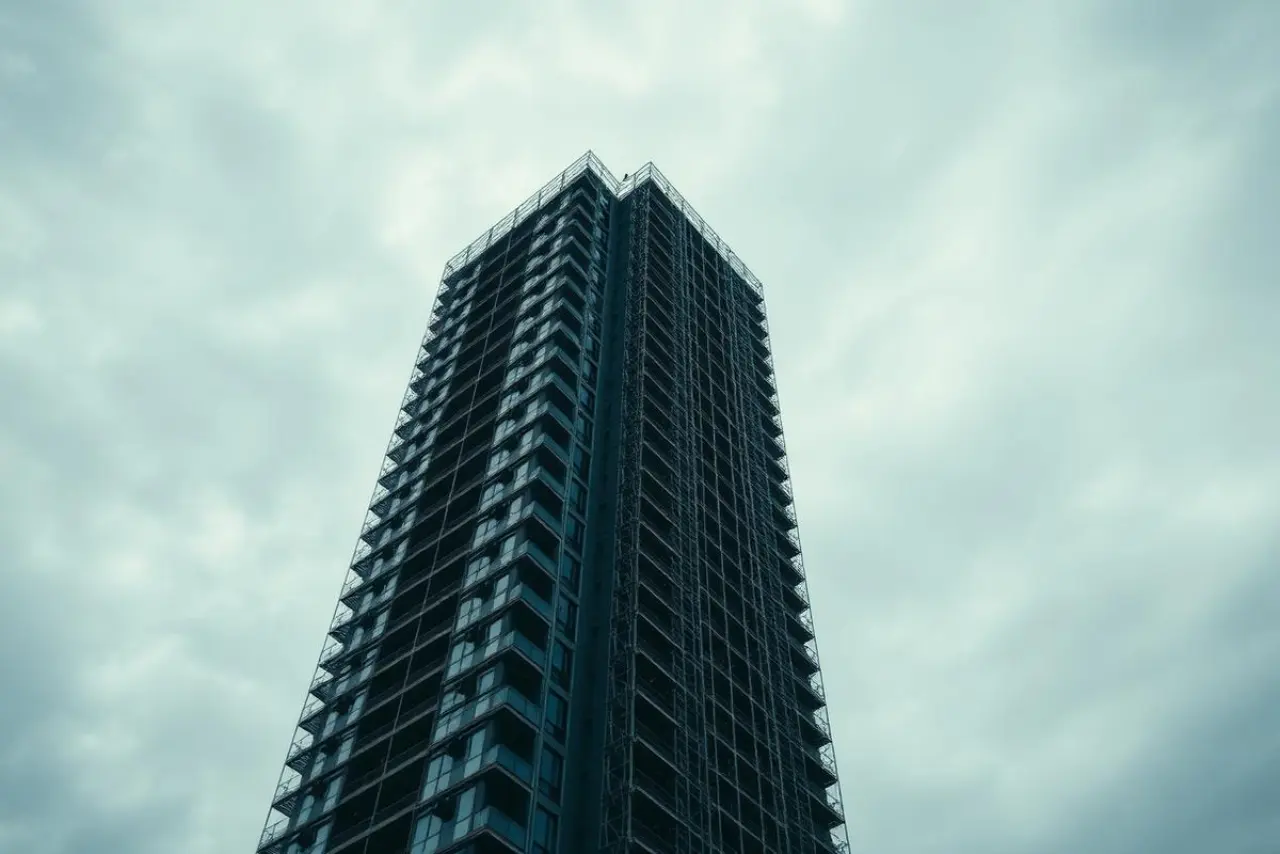
The Fire Safety Act 2021 confirmed and clarified that the Fire Safety Order applies to the structure, external walls (including cladding, balconies and insulation) and flat entrance doors of multi-occupied residential buildings, closing a debate about the boundary of the responsible person's duties that had followed the Grenfell Tower fire. Separately, the Building Safety Act 2022 introduces additional roles — the accountable person and principal accountable person — for higher-risk buildings, which overlap with but are legally distinct from the responsible person role under the Fire Safety Order.
Accountable person (Building Safety Act 2022)
A role introduced specifically for higher-risk buildings (generally residential buildings of 18 metres or seven storeys or more), carrying additional duties around the golden thread of building information, mandatory occurrence reporting and registration with the Building Safety Regulator. It exists alongside, not instead of, the Fire Safety Order responsible person duties for the same building.
Practical steps to establish who the responsible person is for your building
For any building where the answer is not immediately obvious, working through a short sequence of questions usually resolves it: who employs staff on the premises, if any; who holds the freehold or head lease; whether a managing agent has been formally instructed and what their appointment covers; and whether any part of the building is let separately to a business occupier with its own control over that space. Documenting the answer clearly, ideally within the management agreement or a standalone fire safety responsibilities statement, removes the ambiguity before it becomes a problem during an inspection, an insurance claim, or after an incident.
Right to Manage companies and director liability
Where leaseholders have taken on a Right to Manage company, the directors of that company — often leaseholders themselves, acting in a part-time and unpaid capacity — become the responsible person collectively through the company. This surprises many first-time RTM directors, who may not fully appreciate at the point of taking on the role that they have also taken on statutory fire safety accountability for the building, alongside the more visible service charge and maintenance responsibilities they expected. RTM company directors should treat commissioning and acting on a proper fire risk assessment as one of their earliest and most important priorities after taking over management, given how directly the statutory duty now sits with them rather than with a previous, more experienced professional freeholder or agent. In our experience, the handover period immediately following a successful RTM claim is exactly when fire safety documentation is most likely to go missing or fall out of date, because the outgoing freeholder or their agent has limited incentive to hand over records promptly and thoroughly, so new directors should chase this specifically rather than assuming it will arrive as a matter of course.
Request all existing fire risk assessments, action plans and servicing records as part of the handover, in writing, with a clear deadline.
Commission a fresh fire risk assessment early if the handover documentation is incomplete, out of date, or cannot be verified as genuine.
Agree collectively, as a board, who among the directors will hold day-to-day oversight of fire safety compliance, even where a managing agent is instructed.
Take out directors' and officers' insurance that specifically considers fire safety and building safety exposure, given the personal nature of director liability in serious cases.
Keep board minutes recording fire safety decisions and instructions given to agents or contractors, since this evidence is valuable if the RTM company's conduct is ever scrutinised.
Reviewing and updating the position over time
The identity of the responsible person, and how duties are allocated between multiple responsible persons, is not necessarily fixed for the life of a building — a change of managing agent, a change of freeholder, the formation of a new Right to Manage company, or a change in how a mixed-use building is let can all shift who holds which duties. Treating this as a static fact established once and never revisited is a common and avoidable error. We would recommend that any change of management arrangement is treated as a trigger to reconfirm, in writing, who is the responsible person for each part of the building, in the same way that a change of occupancy or layout triggers a fresh look at the fire risk assessment itself.
Working out who the responsible person is
Most disputes about the responsible person come down to control rather than ownership. The checklist below is the sequence we work through when a client is unsure, and it is broadly the sequence an enforcement officer will follow when they arrive and ask who is in charge. Work through it in order and write the answer down: the Fire Safety (England) Regulations 2022 expect residents in taller blocks to be told who the responsible person is, so the answer needs to be something you can state plainly rather than something you would have to reconstruct after an incident.
Identifying the responsible person, step by step
Is anyone an employer at the premises?If so, they are the responsible person for the parts their employees use.
Who has control of the premises as a business or undertaking?Control of the common parts is the decisive test in a block of flats.
If nobody has that control, who owns the premises?The owner becomes the responsible person by default.
Are there several parts in different control?Each responsible person must co-operate and co-ordinate with the others.
Is a managing agent appointed?They carry out the work; accountability stays with the freeholder unless control genuinely transfers.
Is the answer recorded and shared?Residents in blocks over 11 metres should be told who it is and how to reach them.