

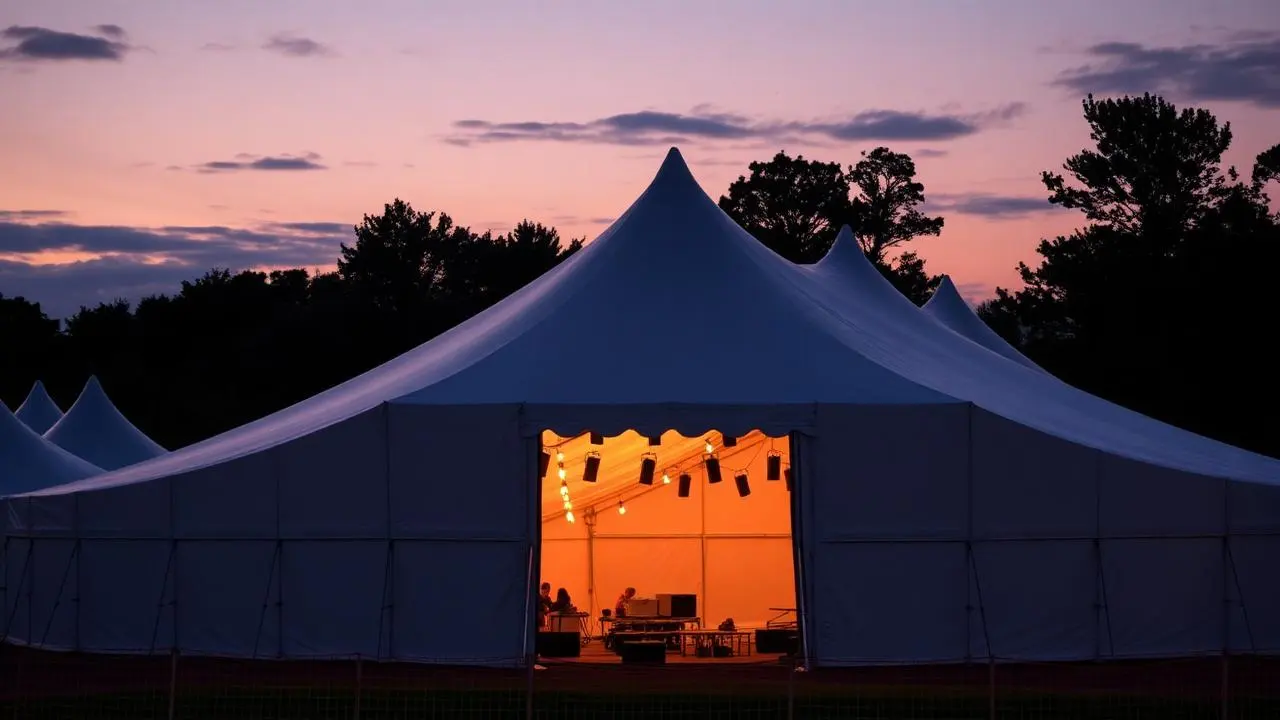




When an event fire risk assessment is needed
Any event that brings the public together under a temporary structure or in a non-standard layout needs a fire risk assessment as part of its overall safety management plan. Local authorities, venues and insurers increasingly ask for a written assessment before granting a licence or permit, particularly where marquees, catering, pyrotechnics, camping or high crowd density are involved.
What we assess
Event fire safety is about more than extinguishers. We look at the whole temporary environment and how people move through it.
- Temporary structure fabric flame ratings and certifications
- Generator, cable and distribution layout and protection
- Catering and hot works, including extraction and gas safety
- Escape route widths, exit numbers and travel distances
- Crowd density, flow and queueing at pinch points
- Fire marshals, first aid and communication plans
- Adjoining structures, vehicles and storage arrangements
Temporary structure-specific risks
Marquees and tents have different fire behaviour to permanent buildings. Fabric ratings, lining materials, the proximity of catering units, and the way power is routed all affect the risk. We review structure drawings, fabric certificates, power plans and site layout before the event, and attend site during build to verify that the planned safety measures are actually in place.
Brand activations and corporate events
Brand activations often combine temporary structures, high-value builds, catering, lighting and AV in spaces not designed for public assembly. We work with agencies and brand teams to produce a fire safety plan that satisfies the venue, the local authority and the insurer without compromising the creative intent. We have delivered this for major brand clients including Audi at Wilderness Festival.
The event safety plan
You receive a written fire risk assessment and event safety management plan covering hazards, controls, escape routes, fire marshal duties, emergency procedures and liaison with the venue and emergency services. For larger events we can also provide a fire safety officer on site during the event.
Pricing and turnaround
Event fire risk assessments start at £299 for a small single-structure event and scale with the size of the site, number of structures, expected attendance and complexity of the programme. We recommend booking as early as possible so the assessment can inform the site and structure design rather than being added at the last minute.
Licensing and the legal basis for event fire safety
Most public events involving temporary structures fall under the Fire Safety Order where the site counts as a place of work, and separately under the licensing conditions attached by the local authority under the Licensing Act 2003 or a temporary event notice. Larger events are also expected to follow the Purple Guide, the sector-recognised good practice document for event safety produced with input from the Health and Safety Executive, and where relevant the Event Safety Advisory Group process run by the host borough. None of these frameworks are optional add-ons: a licensing authority can refuse or attach conditions to a licence where the fire safety case is inadequate, and a local authority safety advisory group meeting will typically expect a written fire risk assessment before it signs off a event of any scale. We prepare documentation that speaks directly to whichever of these frameworks the venue or council is working to.
Working with the event build programme
Fire safety on a temporary site has to be assessed against the build as it will exist at each phase, not just on opening day. Structures, power and fencing typically go up in stages, and the fire risk during a multi-day build — with contractors, vehicles, fuel and hot works on site before stewarding or fire marshals are in place — is often higher than during the event itself. We assess the get-in, the live event and the get-out separately where the risk profile changes materially, and we attend site during the build where the programme or contract value justifies it, checking that structures, escape routes and power distribution match what was assessed on paper rather than what was originally planned.
Fire marshalling and stewarding numbers
The event safety plan sets out how many fire marshals and stewards are needed, where they are positioned, and what their role is if a fire is discovered or an evacuation is called. Numbers are calculated from the expected attendance, the site layout, the number and width of exits, and whether alcohol is served — all recognised factors in crowd behaviour during an emergency. We specify marshal positions on a site plan rather than leaving it as a total headcount, so the organiser's security or stewarding contractor can brief individuals against fixed responsibilities.
- Marshal and steward numbers by zone
- Muster points and evacuation routes by structure
- Communication method between marshals, control and emergency services
- Trigger points for a partial versus full evacuation
Fireworks, pyrotechnics and naked flame
Where an event includes fireworks, pyrotechnics, fire performance, candles or open cooking flames, additional controls apply beyond the general event assessment. We check that pyrotechnic operators hold appropriate competency certification and public liability cover, that exclusion zones and fallout areas are calculated correctly for the effects being used, and that fire extinguishing provision and a suitably briefed fire watch are in place for the duration of the display and for a reasonable period afterwards while embers or residue cool. Cooking and catering units are checked separately for gas safety, extraction and clearance from tenting fabric, since these are among the most common ignition sources on event sites.
The deliverable and how it is used on the day
The final document is a written fire risk assessment paired with a fire safety management plan, structured so it can be read quickly by a licensing officer before the event and used practically by the organiser's control team during it. It includes hazard identification, the controls in place, marshal and steward deployment, evacuation triggers and routes, liaison arrangements with the fire and rescue service, and an appendices section holding structure fabric certificates, generator test certificates and pyrotechnic competency documents in one place, which saves the organiser chasing separate paperwork when a licensing authority asks for evidence at short notice.
Aftercare and post-event review
For repeat events, a debrief comparing what actually happened on site against the assessed plan is worth commissioning separately, particularly where crowd numbers, weather or last-minute build changes meant marshals or the organiser had to make judgement calls that weren't anticipated on paper. We keep records from previous years of the same event where we have been engaged before, which shortens the assessment process on repeat bookings and lets us flag whether a previous year's near miss has actually been designed out of this year's site plan rather than simply carried over.